Singapore
 Australia
 Indonesia
 Japan
Japan Malaysia
 New Zealand
 Philippines
 South Korea
 Taiwan
 Thailand
 VIETNAM
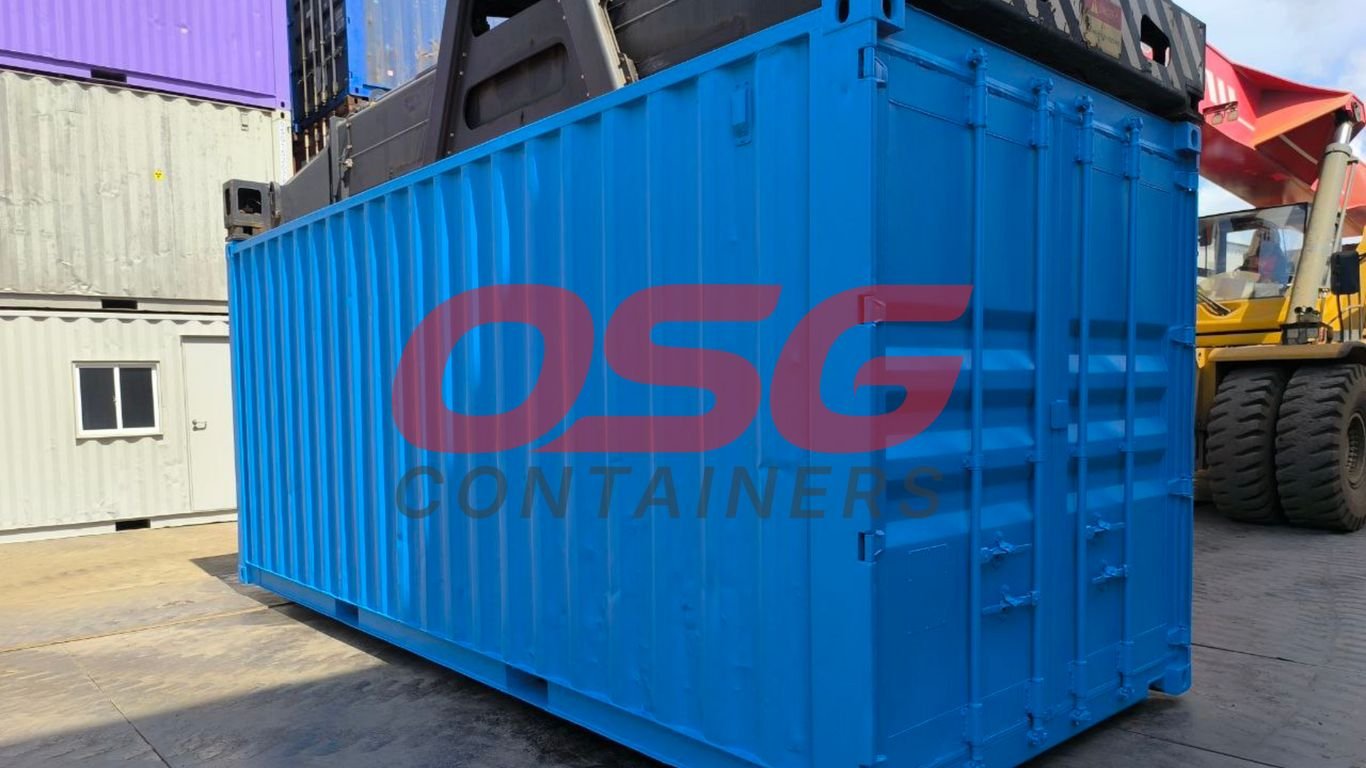
So, you’ve probably seen those big metal tanks on trucks or ships, right? Those are ISO tank containers, and they’re pretty important for moving stuff like liquefied natural gas (LNG) around the world. They’re built to some pretty strict rules to make sure everything stays safe, especially when you’re dealing with super cold liquids. We’re going to take a look at how they’re made, why they’re designed the way they are, and what keeps them from being a problem.
Key Takeaways
- An iso tank container is built to international standards, like those from ISO and IMO, for safe and efficient transport of liquids, including LNG.
- These containers are made with strong materials like stainless steel for the inner tank and carbon steel for the outer, often with vacuum insulation to handle extreme temperatures.
- Structural integrity is checked using methods like Finite Element Analysis (FEA) to predict how the iso tank container will hold up under different stresses and for its intended lifespan of 20 years.
- Safety is a big deal, with designs considering material properties at very low temperatures and assessing potential fatigue damage to ensure the iso tank container meets all requirements.
- Newer designs for iso tank containers focus on improved assembly for better carrying capacity and research continues to look for ways to make them even better for global transport.
Understanding The Iso Tank Container
International Standards And Design
ISO tank containers are pretty neat pieces of engineering, designed to move liquids and gases all over the world. They’re built to strict international rules, like those from the International Organization for Standardization (ISO) and the International Maritime Organization (IMO). This means a 40 ft container you see in one country is pretty much the same as a 40 footer you’d find anywhere else, which is a big deal for global trade. These aren’t just any old tanks; they’re specialized for carrying everything from chemicals to food products, and increasingly, liquefied natural gas (LNG). A common size is the 40 ft container, often a high cube container for maximum volume. The standardization ensures safety and compatibility across different transport modes and borders.
Construction Materials And Insulation
When you look inside an ISO tank, you’ll typically find an inner tank made of stainless steel. This is important because stainless steel holds up well against a lot of different substances and can handle really low temperatures, like those needed for LNG transport (down to -196 °C). Then there’s an outer shell, usually made of carbon steel. Between these two shells, there’s a vacuum insulation. This vacuum layer is key to keeping the contents at their required temperature, whether that’s super cold or just stable. The way these shells are put together matters a lot for how much the tank can hold. Older methods sometimes resulted in uneven spacing between the shells, which limited how much you could safely load. Newer designs focus on a consistent gap, like 100 mm, to maximize the internal volume. For a 40ft container, this can mean a significant increase in carrying capacity.
Applications In Liquefied Natural Gas Transport
One of the most exciting uses for ISO tanks right now is transporting liquefied natural gas (LNG). As the world looks for cleaner energy sources, the demand for LNG is growing fast. ISO tanks are a really efficient way to move this gas, which needs to be kept at extremely low temperatures. Before, many countries relied on importing these specialized tanks, which could be expensive and hard to get enough of. Now, there’s a push for local manufacturing to meet this demand. A typical LNG ISO tank, like a 40 ft container, can hold a substantial amount of LNG, often around 18 tons when filled to 90% capacity according to safety standards. This makes them a vital part of the global energy supply chain.
The design and construction of ISO tanks are a careful balance between holding capacity, material strength, and thermal performance. Getting these elements right is what makes them so reliable for moving sensitive cargo across vast distances.
Structural Integrity And Fatigue Analysis
Finite Element Analysis Methodology
When we talk about making sure these big ISO tanks can handle the job, especially when carrying stuff like LNG, we’re really looking at how they hold up under stress over time. A big part of this is using something called Finite Element Analysis, or FEA for short. Think of it like breaking down a complex structure, like an ISO tank, into thousands of tiny, simple pieces. Then, computers can figure out how forces and pressures spread out across all those little bits. This helps us spot exactly where the stress is highest, which is usually where problems might start down the road.
We use software, like ANSYS, to build a digital model of the tank. This model includes all the different parts – the inner vessel, the outer shell, the supports, and even the welds. Then, we apply simulated loads, like the weight of the liquid inside, temperature changes, and the vibrations from moving it around. The FEA software crunches the numbers and shows us a color-coded map of the stress levels. This detailed stress mapping is key to understanding potential weak spots before they become actual issues.
Low-Cycle And High-Cycle Loading Conditions
ISO tanks deal with different kinds of stress cycles. There are the low-cycle ones, which happen less often but involve bigger changes in stress. Imagine filling up a tank with super cold LNG – that’s a big temperature and pressure swing. Then there are high-cycle conditions, which are smaller, more frequent stresses. Think about the constant vibrations from a truck or ship moving down the road or across the sea. Both types matter for how long the tank will last.
We run simulations for both scenarios. For low-cycle analysis, we look at fewer, more intense load changes. For high-cycle, we simulate many smaller, repetitive loads. The goal is to see how the tank’s material responds to each type of stress over its expected lifespan.
Here’s a look at some stress results from different simulated load cases:
| Load Case | Position | Maximum Principal Stress (MPa) |
|---|---|---|
| Case 1 (High-Cycle) | Position 1 | 103.78 |
| Case 1 (High-Cycle) | Position 2 | 40.463 |
| Case 2 (High-Cycle) | Position 1 | 14.679 |
| Case 2 (High-Cycle) | Position 2 | 107.61 |
| Case 3 (High-Cycle) | Position 1 | 65.402 |
| Case 3 (High-Cycle) | Position 2 | 31.716 |
| Case 4 (Low-Cycle) | Position 1 | 123.2 |
Stress Concentration And Fatigue Life Prediction
Once we know where the stress is highest, we look at stress concentration. This happens at sharp corners, holes, or where different materials join, like welds. These spots can experience much higher stress than the surrounding material, acting like a tiny crack starter. Our FEA models help us pinpoint these areas.
After identifying these high-stress zones, we use that information to predict the tank’s fatigue life. Fatigue is basically the weakening of a material due to repeated stress, even if that stress is below the material’s normal breaking point. We use established codes, like those from the ASME, which provide formulas to calculate how many cycles of stress a tank can handle before it might fail. This involves looking at the stress range, the material properties, and the total number of expected cycles over the tank’s life.
The process involves taking the stress data from FEA, applying specific engineering formulas that account for material behavior under cyclic loading, and comparing the predicted lifespan against the required design life. This comparison helps determine if the tank is built robustly enough for its intended service.
We also calculate a ‘fatigue damage factor’. If this factor is low, it means the tank is well within its safe operating limits for fatigue. If it’s high, it suggests that the tank might not last as long as intended under those specific loading conditions, and design adjustments might be needed.
Safety Considerations In Iso Tank Design
When we talk about ISO tank containers, especially those carrying things like liquefied natural gas (LNG), safety isn’t just a feature; it’s the whole point. Designing these tanks involves a lot of careful thought about how they’ll handle extreme conditions, both in terms of temperature and the physical stresses they’ll face.
Material Properties Under Extreme Temperatures
The materials used for the inner and outer shells are chosen very specifically. The inner tank, which holds the super-cold LNG (around -196°C), is typically made of stainless steel. This steel needs to keep its strength and not become brittle at such low temperatures. The outer shell, usually carbon steel, also needs to perform reliably. It’s not just about surviving the cold; it’s about how the materials behave when they go from extremely cold to warmer ambient temperatures, which can happen during filling or if there’s a leak. This expansion and contraction can put stress on the tank.
Here’s a look at how some key properties change with temperature:
| Material | Temperature (°C) | Young’s Modulus (MPa) | Tensile Strength (MPa) | Yield Strength (MPa) |
|---|---|---|---|---|
| Stainless Steel | -196 | 208,700 | 515 | 138 |
| Stainless Steel | 50 | 193,000 | 515 | 138 |
| Carbon Steel | -196 | 215,800 | 400 | 248 |
| Carbon Steel | 50 | 200,700 | 400 | 240.5 |
As you can see, Young’s Modulus, which relates to stiffness, does change a bit, but the tensile and yield strengths remain pretty consistent for these materials across the tested temperature range. This consistency is key for predictable performance.
Fatigue Damage Factor Assessment
ISO tanks go through a lot over their lifespan. They’re loaded, unloaded, moved by ships, trains, and trucks, and subjected to vibrations and impacts. All these cycles can lead to fatigue, which is essentially the weakening of a material due to repeated stress. We need to figure out how likely fatigue damage is and how severe it might be.
This is where the Fatigue Damage Factor (FDF) comes in. It’s a way to quantify the risk of fatigue failure. A value of 1 means the tank is expected to fail due to fatigue. The goal is to keep this number as low as possible.
- Low-cycle fatigue: Happens when the tank experiences fewer, but larger, stress cycles. Think of major pressure changes or significant impacts.
- High-cycle fatigue: Occurs from many, many smaller stress cycles. This is more about the constant vibrations during transport.
- Stress concentrations: Areas like weld joints, where the geometry changes suddenly, can concentrate stress, making them more prone to fatigue.
Studies have shown that even with accelerations simulating transport conditions (like 2g vertically or 1g longitudinally), the FDF can remain very low, often much less than 1. This suggests the tanks are built to handle these stresses.
Meeting Design Life Requirements
Ultimately, an ISO tank is designed to last for a specific period, often around 20 years. This isn’t just a guess; it’s based on calculations that consider the materials, the expected loads, and the potential for fatigue. The analysis involves simulating various scenarios, from stationary conditions to the rigors of transit, to predict how the tank will hold up.
The entire design process is geared towards preventing catastrophic failure. This means not only picking the right materials but also ensuring the structure can handle repeated stresses without developing cracks or weaknesses over its intended service life. It’s a balance between strength, weight, and longevity.
By assessing material properties at different temperatures and calculating the fatigue damage factor under various operational stresses, engineers can be reasonably confident that the tanks will perform safely throughout their designed lifespan.
Advancements In Iso Tank Technology
Improved Assembly Processes
Getting the inner and outer shells of ISO tanks together used to be a bit of a manual job, often involving cranes. The issue with this method is that the space between the shells can end up being uneven, sometimes varying quite a bit. This inconsistency can limit how much the tank can actually carry. Newer designs are changing this, though. A patented process now allows for a consistent space between the inner and outer shells, which is a pretty big deal. This uniformity means the tank can hold more liquid – we’re talking about a small but significant increase, like 1.78% more when filled to the standard 90% capacity. This might not sound like much, but for something as critical as transporting liquefied natural gas (LNG), every bit counts.
Enhanced Carrying Capacity
Because of these improved assembly methods, ISO tanks can now be designed to carry more. For instance, a 40-foot LNG ISO tank, when filled to 90%, can now hold about 18 tons of product. This boost in capacity is directly linked to the more precise manufacturing techniques. It’s not just about fitting more in; it’s also about doing it safely. The structural integrity is key here, and advancements in how these tanks are put together directly support this.
Research And Development Trends
It’s kind of surprising, given how much we rely on LNG these days, but there hasn’t been a ton of published research specifically on ISO tank development. That’s starting to change. A lot of the recent work is focusing on making these tanks stronger and more efficient. We’re seeing a push towards better fatigue analysis, which is basically looking at how the tank holds up over time with all the stresses and strains of transport. This involves using sophisticated computer modeling, like Finite Element Analysis (FEA), to predict how the tank will perform under different conditions, from everyday bumps to more extreme scenarios. The goal is to make sure these tanks can last their intended design life, often around 20 years, without issues.
The focus in R&D is really on making sure these tanks are not just functional but also incredibly reliable for the long haul. It’s about using advanced simulation tools to catch potential problems before they happen, especially concerning how the materials behave under extreme cold and how the structure handles repeated stress cycles during transit. This proactive approach is what keeps the global supply chain moving safely.
Here’s a quick look at some of the factors considered in these analyses:
- Loading Conditions: Tanks face different stresses whether they’re sitting still (low-cycle) or moving by road, rail, or sea (high-cycle).
- Stress Concentration: Areas like welds can be weak points. New designs aim to minimize these spots.
- Fatigue Damage Factor (FDF): This metric helps predict how much wear and tear the tank experiences over its life. Values well below 1 indicate the tank is performing as expected.
Regulatory Framework And Transport Logistics
International Maritime Organization Standards
The International Maritime Organization (IMO) sets the rules for ships, and when it comes to ISO tank containers, especially those carrying hazardous stuff like liquefied gases, they have specific guidelines. These aren’t just suggestions; they’re international laws that ships have to follow. Think of them as the traffic laws for the ocean. The IMO’s International Maritime Dangerous Goods (IMDG) Code is a big one here. It covers how these tanks should be built, what materials are okay, how they need to be tested, and how they should be marked and handled on board. Following these standards is absolutely key to preventing accidents at sea and protecting both the crew and the environment. It means a lot of paperwork and strict checks, but it’s all about making sure that when these tanks travel the globe, they do so as safely as possible.
Testing Procedures For Tank Containers
Before an ISO tank container can even think about hitting the road or the sea, it has to go through some serious testing. This isn’t a quick once-over; it’s a rigorous process designed to prove the tank can handle whatever it’s supposed to carry and whatever the journey throws at it. We’re talking about pressure tests, leak tests, and drop tests, among others. For tanks carrying things like liquefied natural gas (LNG), the tests get even more specific, checking how the tank performs under extreme cold and pressure. These tests are usually done by independent bodies to make sure everything is fair and by the book. The results are documented, and if the tank passes, it gets a stamp of approval, essentially a certificate saying, ‘Yep, this tank is good to go.’
Impact On Global Energy Transport
ISO tank containers have really changed the game for moving energy resources around the world. Before these standardized tanks, transporting things like LNG was a much bigger hassle, often limited to specific pipelines or very specialized ships. Now, with ISO tanks, you get a lot more flexibility. They can be moved from a ship to a train to a truck without having to transfer the product itself, which cuts down on time, cost, and the risk of spills. This flexibility means that energy can get to places it couldn’t easily reach before, supporting industries and economies globally. It’s a big reason why we see more widespread use of fuels like LNG, making energy supplies more accessible and reliable.
The standardization brought by ISO tanks means that a container built in one country can be handled and transported using the same procedures and equipment in virtually any other country. This global uniformity is what makes international logistics for bulk liquids and gases so much more efficient and predictable than it used to be.
Wrapping It Up
So, after all that, it looks like these ISO tank containers, especially the newer ones designed for things like LNG, are pretty solid. The science behind them, looking at how they handle stress and wear over time, shows they’re built tough. They’re designed to last for years, even with all the bumps and shakes of transport. It’s good to know that as we rely more on cleaner fuels, the containers carrying them are also getting smarter and safer. It’s not just about moving stuff; it’s about doing it the right way, with safety as the main focus.
Frequently Asked Questions
What exactly is an ISO tank container and what makes it special?
An ISO tank container is like a super-strong, standardized tank used for shipping liquids and gases all around the world. It’s built to strict international rules, so it’s safe and reliable. Think of it as a big, metal bottle that can handle tough journeys and extreme temperatures, perfect for things like Liquefied Natural Gas (LNG).
How are these tanks built to be so strong and safe?
These tanks are made from tough materials like stainless steel for the inside and carbon steel for the outside. They often have special insulation to keep the contents at the right temperature. Engineers use advanced computer tools, like Finite Element Analysis (FEA), to test how the tank will handle all sorts of bumps, shakes, and pressures it might face during its long life, ensuring it won’t break or leak.
What does ‘fatigue analysis’ mean for an ISO tank?
Fatigue analysis is like checking how many times a material can bend or stretch before it gets tired and might break. For an ISO tank, engineers look at how it handles constant small stresses (high-cycle) and occasional big stresses (low-cycle) from being moved around. This helps them figure out how long the tank will safely last, usually aiming for a 20-year lifespan.
Are there any new improvements being made to ISO tanks?
Yes! Companies are working on making ISO tanks even better. For example, they’re finding ways to build them more precisely, ensuring the space between the inner and outer shells is always the same. This not only makes them stronger but also allows them to carry more liquid, like LNG, which is really important as the world needs more of this cleaner energy.
How do rules and regulations play a role in ISO tank transport?
Very important! Organizations like the International Maritime Organization (IMO) set strict rules for how these tanks must be designed, built, and tested. These rules make sure that tanks carrying potentially dangerous materials are safe for everyone involved, from the people loading them to the communities they travel through. It’s all about making sure transport is secure and efficient.
Why is transporting LNG in ISO tanks important?
LNG is a cleaner energy source that’s becoming more popular. ISO tanks are a key part of getting this fuel where it’s needed safely and efficiently. Because the demand for LNG is growing so fast, having well-designed and reliable ISO tanks is crucial for meeting energy needs and supporting cleaner power generation and transportation.