Singapore
 Australia
 Indonesia
 Japan
Japan Malaysia
 New Zealand
 Philippines
 South Korea
 Taiwan
 Thailand
 VIETNAM
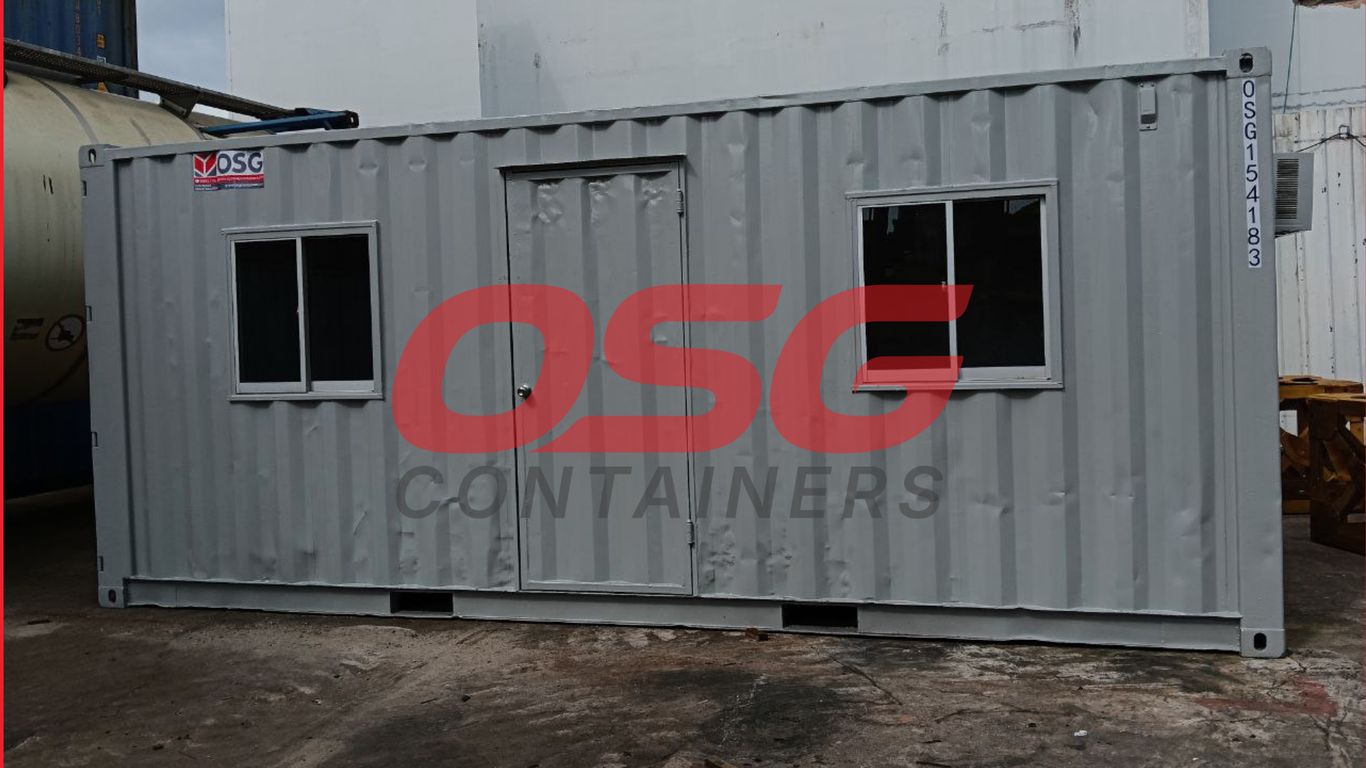
The way we think about office space has really changed. Gone are the days when a permanent building was the only option. Now, businesses need flexibility. Project needs shift, teams grow, and sometimes you just need a workspace that can move with you. That’s where office container solutions come in. They offer a smart way to get the space you need, when and where you need it, without the hassle of traditional construction.
Key Takeaways
- Office containers offer unmatched mobility, letting you set up shop wherever your projects take you, adapting easily to changing demands.
- Built with durable steel, these units provide a sturdy and long-lasting workspace, suitable for semi-permanent setups with basic upkeep.
- Customization is a big plus, allowing you to tailor the layout, amenities, and security features of your office container to fit your team’s specific needs.
- Deployment is remarkably fast, with office containers typically ready for use in just a few days, significantly cutting down project downtime compared to traditional building.
- Choosing an office container is often more cost-effective than permanent construction, with options for rental or purchase that fit various budgets and project lengths.
Understanding Office Container Mobility
The way businesses operate has really changed. Gone are the days when everyone had to be in the same big building all the time. Now, projects pop up in different places, teams might grow fast, or maybe you just need a temporary spot for a specific job. Traditional buildings just can’t keep up with that kind of flexibility. That’s where office containers shine. They’re not just boxes; they’re actual workspaces that can go where you need them, when you need them.
Relocating Your Workspace Seamlessly
Think about it: you’ve got a big project, and you need an office right there on the job site. Once that project wraps up, what do you do with the building? With a standard office, you’re stuck. But an office container? It’s designed to be moved. Providers handle the heavy lifting, taking it from your old site to the new one. This means your team doesn’t lose valuable work time figuring out how to pack up and move, or worse, being stuck in a location that no longer makes sense for the business.
Adapting to Shifting Project Demands
Projects rarely go exactly as planned, right? Timelines get pushed, scope changes, or maybe a new opportunity pops up that requires a different location. Office containers let you adjust without a huge headache. Need an office closer to a new phase of construction? No problem. Have to downsize because a project is winding down? That’s manageable too. This adaptability is a big deal for staying efficient and keeping costs in check.
The Advantage of On-Site Project Offices
For industries like construction, energy, or event management, having an office right where the action is makes a huge difference. Managers and teams can be on the ground, talking directly with workers, spotting problems early, and making quick decisions. This close proximity cuts down on miscommunication and speeds up problem-solving. It’s like having your command center exactly where you need it, making complex projects run a lot smoother.
Having a workspace that can physically follow your operations is a game-changer. It keeps your team connected to the work and allows for faster responses to whatever comes up.
Ensuring Permanence with Office Containers
Office containers aren’t just for short-term use—they can actually stand the test of time and provide a stable base for your team’s work. Whether your company needs a workspace for a few months or several years, these containers have a lot to offer in terms of long-term reliability.
Durability and Longevity of Steel Construction
One of the main features that gives office containers their staying power is their construction. Most office containers use high-grade steel, which means they’re built to handle rough treatment, rain, wind, and snow. They don’t easily crack or break down in tough climates like traditional wood sheds or prefab trailers.
Steel office containers can last for decades with proper care, often well beyond the timelines of many project sites.
Here’s a look at why they last:
- Made from weather-resistant Corten steel, the same material used in shipping containers.
- Welded seams and thick panels fight off rust and damage.
- Heavy-duty floors withstand moving equipment and heavy traffic.
| Feature | Impact on Longevity |
|---|---|
| Corten Steel | Resists corrosion and harsh weather |
| Reinforced Doors | Keeps out intruders and the elements |
| Welded Frame | Prevents twisting or sagging over years |
Maintenance for Extended Service Life
You can’t just park a container and ignore it for years—some upkeep is important. Thankfully, maintaining an office container is usually simple:
- Inspect for rust or dents a couple times a year, especially around the bottom and door frames.
- Paint touch-ups where chips or scratches appear, since exposed metal can rust quickly.
- Lubricate hinges and locks so doors keep working smoothly and securely.
- Check and clean gutters or drainage spots (if any) to keep water from pooling around the base.
It’s the kind of maintenance you can do in a few hours each season—no specialists required.
Regular maintenance of an office container helps avoid big repair bills later and keeps your workspace solid for the long haul.
Achieving Semi-Permanent Solutions
Sometimes you don’t need something fully permanent, but you still want the confidence that your office isn’t going anywhere. Office containers can strike the right balance by being:
- Placed on foundations for stability (simple concrete pads or piers work well)
- Outfitted with HVAC, insulation, and secure electrical systems
- Linked together or stacked to create larger complexes
- Designed to be removed and moved to a new site later, if your company’s needs change
This way, you get a tough, robust office that feels permanent but stays flexible. In some places, you might have to check local rules for long-term installations, but it’s usually easier and cheaper than building a traditional structure.
So, if you’re looking for an office setup that can stick around—yet still adapt if needed—office containers do the job without fuss.
Customization and Features of Office Containers
Office containers may look straightforward from the outside, but inside, they’re way more flexible than you’d think. You don’t get stuck with a cookie-cutter layout—these units are built for real use and can be tweaked to fit almost anyone’s needs. Let’s break down what can actually be changed and why it works.
Tailoring Layouts to Team Needs
The flexible layout is probably the real game-changer for office containers. Firms usually start by figuring out the team size, job roles, and any must-have spaces like meeting rooms or storage.
- You can ask for open floor plans for collaborative teams or request individual offices if privacy is important.
- Partition walls can create break rooms, conference spaces, or even small kitchenettes.
- For remote worksites, adding built-in storage or equipment rooms is common.
Sizes range from compact 10-foot units to roomy 40-foot containers. There’s also mix-and-match potential—several containers can connect for bigger setups or future expansion.
Office containers don’t force teams to adjust their style—they let organizations set up the work environment that really matches how people want to work.
Integrating Essential Amenities
These containers often come prepped with things you’d find in a regular building, just packaged smartly:
- HVAC systems for climate control, handling anything from chilly mornings to summer heatwaves
- Proper lighting, both overhead and task-based, plus lots of outlets for computers and devices
- Pre-wired internet and phone lines, with some units offering WiFi and Ethernet by default
- Restroom facilities or kitchenette setups, depending on team needs
Here’s a quick comparison of typical must-have amenities:
| Feature | Standard Option | Upgrade Available? |
|---|---|---|
| HVAC | Yes | Zone control, HEPA |
| Lighting | LED overhead | Custom placement |
| Electrical Outlets | Every workspace | USB, surge protect |
| Data Connectivity | Ethernet ports | WiFi, phone lines |
| Restroom | By request | Full/bathroom |
| Kitchenette | By request | Fridge, microwave |
Enhancing Security and Functionality
Protecting equipment and sensitive info matters, especially if the container’s in a high-traffic or open location. Features you’ll usually see include:
- Steel exterior doors with heavy-duty locks
- Lock boxes and internal deadbolts to keep bolt cutters useless
- Reinforced windows (sometimes with bars or privacy film)
- Security lighting and, for some setups, camera wiring
Want to add more storage or workspace? Built-in shelving, wall hooks, and custom desks are popular. Some teams request whiteboards mounted on walls or use fold-up tables for quick pivoting between tasks.
Bottom line: With so many options, office containers aren’t just temporary cubicles—they can act like full-featured offices or even showrooms, designed from the start to support the way people actually work.
Speed and Efficiency in Office Container Deployment
Modern office containers are all about getting set up quickly, which is something traditional office builds just can’t compete with. When you pick container-based offices, you’re often saving weeks—sometimes months—compared to the usual construction timeline. Here’s how they shake out on the speed and efficiency front.
Rapid Installation Versus Traditional Builds
Setting up a regular office building is usually complicated and slow. There’s paperwork, permits, weather delays, and a lot of waiting around. With office containers, the process is a lot simpler and faster:
- Containers can be on-site and functional in just a few days (average: 3-5 days), rather than several months.
- Delivery trucks set them in place, and basic utility connections can be finished off quickly.
- Some containers arrive ready to use, with furniture and fittings already installed.
Installation Speed Comparison
| Solution Type | Typical Install Time |
|---|---|
| Office Container | 3-5 days |
| Traditional Building | 3-6 months |
Minimizing Project Downtime
Fast setup isn’t just about convenience—it saves businesses real money by reducing the time your team waits for a functional space. Downtime drops by nearly 20%, so projects get moving again.
- Employees start work immediately after the container is set up.
- No long transition period between sites for mobile teams.
- Quick move-ins mean you meet deadlines without last-minute scrambles.
The faster your office is up, the less you lose in productivity—this usually pays for itself by the end of the project.
Streamlined Delivery and Setup Process
The delivery and install process is pretty straightforward, with much less hassle than you’d expect:
- Site gets prepped – just a flat, stable surface is enough.
- Container arrives by truck and is carefully positioned.
- Utility hookups (electric, data, sometimes water) are connected.
- Interior setup: ready-to-use containers are operational right away, while empty ones get fitted out in hours or days.
- If you move again, the process repeats just as quickly.
A reliable provider will handle permitting and logistics, so you aren’t bogged down by red tape.
- No heavy construction equipment on site for months
- Minimal disruption to surrounding work or neighborhoods
- Easier to relocate the whole setup for the next job
Office containers take a lot of the guesswork and waiting out of office setup, making them a smart pick for teams that can’t afford delays.
Cost-Effectiveness of Office Container Solutions
Choosing between office container rental and buying used office containers for sale really comes down to your project’s needs, timeline, and budget. Here’s a quick look at the main differences:
| Option | Upfront Cost | Ongoing Cost | Flexibility | Resale Value |
|---|---|---|---|---|
| Rent a Container Office | Low | Monthly | High | None |
| Used Office Containers for Sale | High | Minimal | Low | Good |
- Renting makes sense if your project is short-term, the future is uncertain, or cash-flow flexibility matters. You avoid heavy investment and can easily switch or return the container.
- Buying works out if you will reuse the site office container over multiple projects or for the long haul. The upfront payment is higher, but you avoid monthly charges—and you can sell the unit down the road if plans change.
- Some providers offer lease-to-own plans, so you can spread costs over time and work toward ownership.
If you’re stuck between renting and buying, consider how frequently you’ll need workspace and what unpredictable changes might come up. Sometimes it’s safer to rent until the road ahead looks clearer.
Budgeting for Delivery and Setup
It’s not all about the price of the container. Make sure to factor in:
- Delivery charges, which can vary based on distance and container size
- Site prep, like leveling ground or adding foundations, especially for semi-permanent offices
- Utility connections—electricity, internet, water can add up fast
- Permits or local fees, which sometimes surprise folks if not checked ahead
- Customization—like insulation, HVAC, or shelves, which might be included or priced extra
Preparing a clear budget upfront helps prevent last-minute cost overruns, which are way too common with site office container projects.
Long-Term Value Through Reuse
Office containers can easily be relocated from one job to the next or repurposed for new uses. That means:
- Less money spent on new building construction each time your team moves
- Faster setup compared to traditional offices—saving both time and labor costs
- Flexibility to convert the same container for storage, meeting rooms, or break spaces later
The real savings come from the ability to reuse or sell your container when the project ends, making the total cost lower over time than most traditional office builds.
Rent, lease, or buy, office containers give you more options for stretching your dollar—especially when you need to scale up or down with each new project.
Sustainability and Energy Efficiency
Office containers have shifted from being just a quick fix to a smart choice for those paying attention to the planet and their utility bills. By reusing shipping containers, many companies cut down on the need for new materials, shrinking their environmental footprint. Let’s break it down further.
Reducing Environmental Impact Through Reuse
Reusing containers isn’t just about saving money—it genuinely reduces waste and demand on natural resources. When a container gets upcycled into an office, you avoid all the debris and leftover scrap that come from traditional builds. Instead of sitting around unused, these steel boxes find new life, again and again. Here’s what this means in practice:
- Less construction waste sent to landfills
- Fewer raw materials pulled from the earth
- Lower carbon output from both transport and site prep
- Can be relocated or repurposed as projects end
Over its lifetime, a single container office can serve several different needs—offices, classrooms, even health clinics—while cutting down on the overall volume of new construction needed.
Energy-Saving Features for Comfort
Modern container offices are surprisingly energy efficient when done right. Insulation and climate control matter a lot, so most setups feature high-grade wall and roof insulation, plus windows that minimize heat loss. Many also come with these built-in add-ons:
- Low-energy LED lighting fixtures
- Properly sized HVAC units for consistent comfort
- Energy-efficient windows and door seals
- Solar panel options for off-grid or backup power
- Rainwater collection systems for eco-conscious water use
Here’s a quick table showing some features and their expected impact on energy bills:
| Feature | Energy Savings (%) |
|---|---|
| LED Lighting | 10-15 |
| High-Grade Insulation | 15-25 |
| Energy-Star HVAC | 8-12 |
| Solar Panel Integration | Up to 30 |
Sustainable Workspace Solutions
Containers support sustainability not just by what they’re made of, but in how companies use them. Rather than constructing something you’ll abandon, you roll out office containers only as long as you need. When work wraps up, the space isn’t wasted—it’s moved to the next job or reconfigured for another use. This adds up over years.
Key points to using containers as a sustainable solution:
- Modular design means units scale up or down without new construction.
- Transport is streamlined—less fuel, fewer trips.
- Built in a factory, so there’s less waste and better quality control.
Honestly, if you’re thinking both about today’s needs and tomorrow’s world, office containers are worth some serious thought.
The Takeaway: Flexibility Often Wins
So, when you’re figuring out office space, it’s really about what makes the most sense for right now and for the future. Traditional buildings have their place, sure, but for so many businesses, especially those that move around or grow fast, a mobile or portable office is just a smarter way to go. They set up quick, cost less upfront, and you can move them when you need to. It’s not about being temporary forever, it’s about having the right space, right where you need it, without getting tied down. Think about your projects, your team’s size, and how often things change. For a lot of us, that flexibility is exactly what we need to keep things running smoothly and save some cash along the way.
Frequently Asked Questions
How fast can an office container be set up?
Office containers can usually be set up in about 3 to 5 days. This is much faster than building a regular office, which might take months. Once the container arrives, it is placed on a level spot, hooked up to utilities, and your team can start working soon after.
Can office containers be moved to different locations?
Yes, office containers are designed to be moved. They are loaded onto trucks and delivered wherever you need them. This makes them great for businesses that change locations, like construction companies or event organizers.
Are office containers strong and safe for long-term use?
Office containers are made from steel, so they are very strong and last a long time. With simple maintenance like cleaning and checking door seals, they can be used for many years across different projects.
What features can be added to office containers?
You can add many features to office containers, such as restrooms, kitchens, air conditioning, heating, and internet connections. You can also choose the layout, put in desks and chairs, or add ramps and steps for easy access.
Are office containers good for the environment?
Yes, office containers are a greener choice. They are reused for different projects, so fewer new buildings need to be built. Many containers have good insulation and energy-saving features, which help lower heating and cooling costs.
Is it better to rent or buy an office container?
Renting is a good choice for short-term projects or if you’re not sure how long you’ll need the office. Buying is better for long-term use because you save money over time. Some companies also offer lease-to-own plans, so you can pay monthly and own the container later.