Singapore
 Australia
 Indonesia
 Japan
Japan Malaysia
 New Zealand
 Philippines
 South Korea
 Taiwan
 Thailand
 VIETNAM
So, you’ve got a 20ft container on the way, or maybe you’re thinking about getting one. That’s cool. But now comes the big question: what exactly fits inside? It’s easy to just guess, but that can lead to a lot of wasted space or, worse, needing a second container you didn’t plan for. We’re going to break down what a 20 footer container can really hold, how to pack it like a pro, and when it’s the right choice for you. Let’s get this sorted.
Key Takeaways
- A standard 20ft container offers about 33 cubic meters of space, which is enough for a small car, a few pieces of furniture, or a lot of boxes.
- Don’t just guess how much will fit; use floor plans or visual aids to plan your packing, especially for larger items like furniture or vehicles.
- Packing smart means disassembling items when possible, using all available space, and considering weight limits to avoid issues.
- While a 20ft container is versatile, consider high cube options for extra height or larger containers (like 40ft) if you have bulky but light goods.
- Common mistakes include over or underestimating space, ignoring the weight capacity, and picking the wrong container type for your specific needs.
Understanding The 20ft Container
Internal Volume and Dimensions
So, you’re looking at a 20ft container. It’s a pretty standard piece of equipment in the shipping world, and for good reason. Think of it as the workhorse for a lot of different jobs. Externally, it measures about 20 feet long, 8 feet wide, and 8.6 feet tall. Now, when you get inside, you lose a little bit of space because of the walls, so you’re looking at roughly 19.4 feet in length, 7.8 feet in width, and 7.9 feet in height. This gives you a usable internal volume of around 1,170 cubic feet. It’s not massive, but it’s a decent amount of space for many needs.
TEU Equivalence Explained
You’ll often hear containers talked about in terms of TEUs. TEU stands for Twenty-foot Equivalent Unit. Basically, it’s a standard way to measure container capacity. A standard 20ft container is exactly 1 TEU. If you were comparing it to a larger container, like a 40ft container, that would be 2 TEUs. This system helps everyone in the shipping industry speak the same language when talking about how much cargo is being moved. It’s a simple way to keep track of things, whether you’re dealing with one 20ft container or a whole fleet.
Weight Capacity and Payload
Weight is a big deal when you’re talking about containers. A 20ft container has a maximum gross weight limit, which is the total weight of the container itself plus whatever you put inside it. This is usually around 30,480 kg (or about 67,200 lbs). The empty container, called the tare weight, weighs about 2,080 kg (4,585 lbs). What you’re really interested in is the payload – that’s the maximum weight of goods you can actually put inside. For a 20ft container, this works out to be roughly 28,400 kg (62,610 lbs). It’s super important not to go over this limit, as it can cause problems with transport and safety. It’s a good amount of weight, but you have to be mindful of it, especially if you’re packing dense materials.
When planning what goes into your container, always think about both the space it takes up and how much it weighs. Sometimes, you might fill up the space before you hit the weight limit, or vice versa. Knowing these limits helps avoid costly mistakes and ensures everything arrives safely.
Real-World Capacity Of A 20ft Container
So, you’ve got a 20ft container on its way, or maybe you’re thinking about getting one. The big question is, what can you actually fit inside? It’s not just about the numbers; it’s about picturing your stuff in that steel box. Understanding the real capacity helps you avoid ordering too much or too little space, saving you time and money. Let’s break down what a standard 20-footer can hold.
Fitting Boxes and Furniture
When it comes to household goods or inventory, a 20ft container is surprisingly spacious. Think about a typical 3-bedroom home’s contents – it can often fit. If you’re packing standard moving boxes, you could fit hundreds, maybe even up to 300-350 if you’re really good at Tetris. For smaller archive boxes, that number can jump significantly, potentially reaching over 900 if packed tightly.
For furniture, you can usually fit a good amount. Imagine loading up a few sofas, a couple of double beds with their mattresses, and maybe some chairs and tables. It’s also a good size for storing appliances like washing machines, dryers, or refrigerators. You might get around 4-5 standard appliances in there, depending on their size and how you arrange them.
Here’s a rough idea:
| Item Type | Estimated Quantity | Notes |
|---|---|---|
| Standard Moving Boxes | 300-350 | Tightly packed, varying sizes |
| Archive Boxes | 900+ | Smaller boxes, packed very efficiently |
| Sofas | 2-3 | Depending on size and configuration |
| Double Beds | 2 | With mattresses |
| Washing Machines | 4-5 | Mixed with other smaller items |
Storing Appliances and Equipment
Beyond typical home items, 20ft containers are great for storing larger equipment. Businesses often use them for excess inventory or machinery. For example, you could store around 50-60 refrigerators or a similar number of flat-screen TVs. If you’re dealing with pallets, a 20ft container can typically hold about 10 standard pallets, each stacked with goods.
For smaller workshops or storage needs, think about tools, generators, or other equipment. The key is to pack efficiently, using the space from floor to ceiling as much as possible. Remember that heavier items should ideally go towards the bottom and sides for stability.
It’s always a good idea to leave a little bit of empty space, maybe 10-15%, rather than trying to cram everything in. This not only makes unloading easier but also helps prevent damage to your items during transit.
Accommodating Vehicles
Can you fit a car in a 20ft container? It’s possible, but it’s often tricky and not always recommended, especially for standard cars. You might be able to fit one smaller car, but it will likely take up most of the space. If you’re trying to fit two, they would need to be very small vehicles, and loading them safely would be a significant challenge. It’s generally more practical to use a 40ft container or a specialized car carrier if you need to transport vehicles.
However, for smaller items like motorcycles, bicycles, or even ride-on lawnmowers, a 20ft container works well. You can often fit several bikes or a couple of motorcycles alongside other stored items, provided you secure them properly to prevent movement.
Maximising Space Within Your 20ft Container
So, you’ve got your 20ft container, and now it’s time to figure out how to cram as much as possible inside without turning it into a jumbled mess. It’s a bit like playing Tetris, but with real stuff. The trick is to think vertically and pack smart.
Smart Packing Strategies
Getting the most out of your container isn’t just about shoving things in. It’s about a bit of planning. Think about how you can break down larger items – taking legs off tables or dismantling beds can make a huge difference in how efficiently they fit. Always box up smaller, loose items. This makes them stackable and protects them. Don’t just throw things in randomly; try to group similar items together. This makes unpacking way easier later on.
Here are a few pointers:
- Disassemble when possible: Furniture like beds, tables, and chairs can often be taken apart to take up less space.
- Box it up: Use sturdy boxes for smaller items. This creates uniform shapes that stack better.
- Fill the gaps: Use smaller boxes, blankets, or packing materials to fill any empty spaces within larger items or between boxes. This stops things from shifting around during transit.
- Weight distribution: Put heavier items on the bottom and towards the center of the container. This keeps it stable.
When packing, remember that a 20ft container has a usable internal space of roughly 33 cubic meters. While it might seem like a lot, it fills up faster than you think. Aiming to fill about 85% of the space is often a good target, leaving a little room for maneuvering and to avoid exceeding weight limits.
Utilising Vertical Space
Most people look at the floor space of a container and stop there. But the real magic happens when you start looking up. Standard containers are pretty tall, and there’s a lot of unused space above your head. Think about stacking boxes as high as you safely can, or using furniture items to create platforms for lighter goods. If you’re storing things like bikes or long items, consider how they can be hung or positioned vertically against the walls.
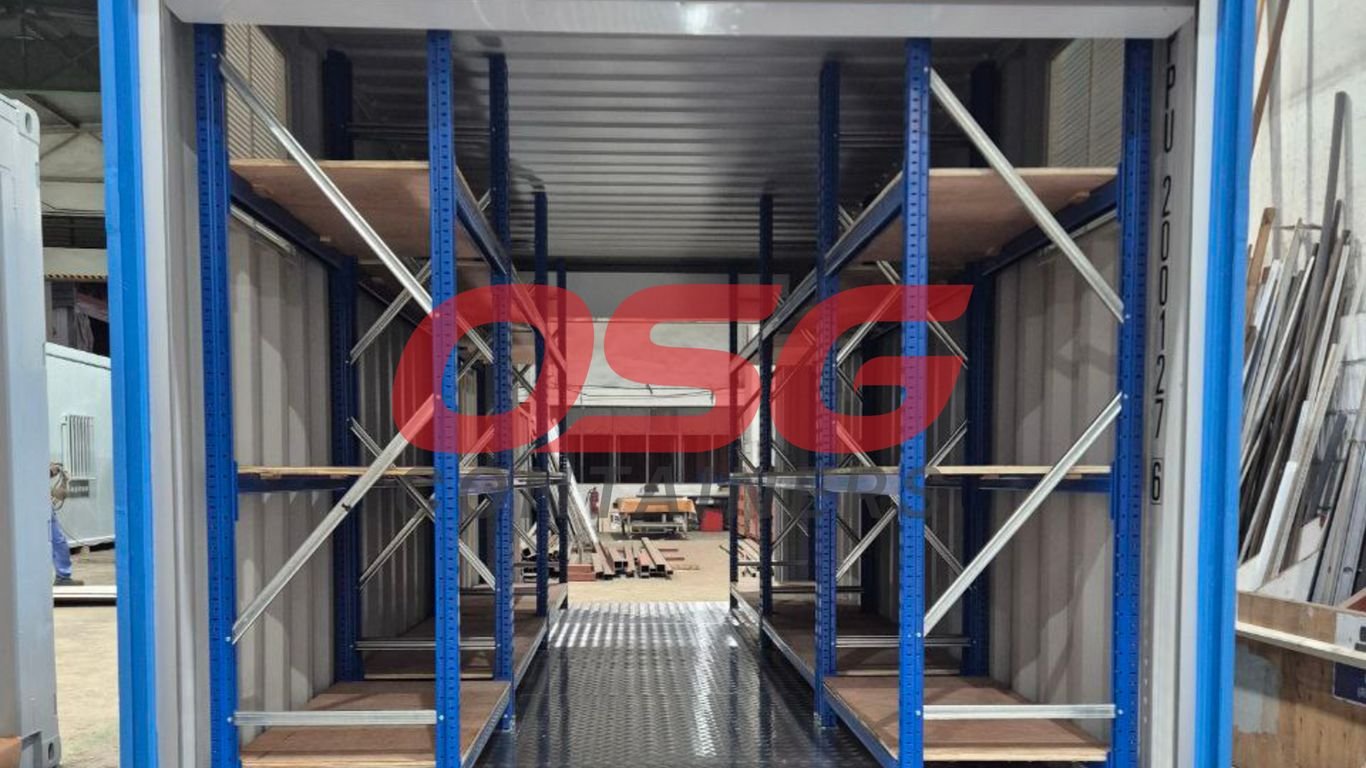
The Role of Container Shelving
If you’re storing tools, inventory, or lots of smaller items, shelving is a game-changer. It turns that empty vertical space into organized storage. You can get all sorts of shelving units, from simple boltless racks that are easy to put up, to more heavy-duty industrial systems.
Here’s a quick look at some options:
| Shelving Type | Ideal Use | Weight Capacity (per shelf/section) | Installation Notes |
|---|---|---|---|
| Boltless Shelving | General storage, easy setup | Up to 200 kg | No tools needed |
| Wall-Mounted Brackets | Maximizing floor space, tool storage | Up to 150 kg | Requires fixing to walls |
| Modular Racking | Flexible configurations, varied items | Up to 500 kg | Tool assembly required |
| Heavy-Duty Industrial | Maximum load handling, dense storage | 1,000+ kg | Professional installation |
Using shelving not only lets you store more but also keeps things tidy and makes it easier to find what you need. Just make sure whatever you install is rated for the weight you plan to put on it and is secured properly within the container.
Choosing The Right Container For Your Needs
So, you’ve got a pile of stuff or a business need that requires some serious storage. The 20ft container is a popular choice, but it’s not always the perfect fit for everyone. Thinking about container renting or buying? It’s smart to look at your options before you commit. Let’s break down how to pick the container that actually works for you.
20ft vs. Larger Containers
When you’re comparing container sizes, it often comes down to how much stuff you have and how heavy it is. A 20ft container is great for dense, heavy items that don’t take up a ton of space. Think of machinery parts or a solid load of bricks. But if you’ve got lighter, bulkier things, like furniture or lots of boxes, a 40ft container might actually be more cost-effective. You get double the space, but the price isn’t usually double, making the cost per cubic foot lower. It’s a trade-off between upfront cost and overall value for your specific load.
Here’s a quick look at how they stack up:
| Container Size | Best For |
|---|---|
| 20ft | Dense, heavy cargo; smaller loads |
| 40ft | Bulky, lighter cargo; larger volumes |
| 40ft High Cube | Very tall items; maximum volume |
Don’t just guess your space needs. Measure everything carefully, both by volume and by weight. Overestimating means you’re paying for empty space, and underestimating means you might need a second container, which costs more in the long run.
High Cube Options for Extra Height
Sometimes, a standard container just doesn’t cut it because your items are a bit too tall. That’s where High Cube (HC) containers come in. They’re basically the same length and width as a standard container, but they’re about a foot taller. This extra height can make a big difference if you’re storing tall equipment, stacked furniture, or anything that pushes the limits of a regular container’s ceiling.
Think about these scenarios:
- Tall Equipment: Storing industrial machinery or large appliances that are taller than average.
- Bulk Furniture: Moving or storing sofas, wardrobes, or beds that have significant height.
- Maximizing Pallet Stacks: If you use pallets, the extra height allows for more stacked pallets, increasing your storage density.
Specialised Containers for Niche Requirements
Beyond the standard dry van and high cube options, there are specialised containers designed for very specific jobs. If you’re dealing with goods that need temperature control, like food or certain chemicals, you’ll need a reefer (refrigerated) container. For items that are too wide or tall to fit through standard doors, like large vehicles or construction beams, a flat rack container might be the answer. These have no side walls and are open at the top, making loading and unloading oversized items much easier. While these specialised units cost more, they’re often the only practical solution for certain types of cargo, saving you hassle and potential damage.
When considering container renting or purchasing, always ask about these specialized types if your cargo is unusual. It’s better to get the right container from the start than to try and force a standard one to work.
Practical Applications For A 20ft Container
So, you’ve got a 20ft container. What can you actually do with it? Turns out, these steel boxes are way more versatile than just shipping stuff across the ocean. They’re like a blank canvas for all sorts of storage and setup needs, whether you’re a homeowner, a small business owner, or even planning an event.
Home Storage Solutions
Think of a 20ft container as a super-secure, weather-proof extension of your home. It’s perfect for when you’re renovating and need to stash furniture and belongings safely out of the way. Or maybe you’ve just got too much stuff and your garage is overflowing. This is where a 20ft container really shines for personal use. It can easily hold the contents of a two-bedroom house, making it a great option for temporary storage during a move or decluttering project.
- Moving House: Stash furniture, boxes, and appliances while you pack or unpack.
- Renovations: Keep your valuables safe and dry from dust and damage.
- Seasonal Storage: Store garden furniture, holiday decorations, or sports equipment.
- Long-Term Decluttering: Free up space in your home by storing items you don’t need daily.
A 20ft container offers a practical, on-site storage solution that saves you time and money compared to renting off-site units. Plus, it’s protected from the elements and potential theft.
Small Business Inventory
For small to medium-sized businesses, a 20ft container can be a lifesaver, especially when warehouse space is tight or too expensive. It’s a flexible and affordable way to manage stock, whether you’re a retailer needing extra room during busy seasons or a startup with inventory overflow. You can even get containers with special access features, like double doors or full side access, to make managing your stock a lot easier.
Here’s how businesses use them:
- Retail Stock Overflow: Handle seasonal rushes without needing a bigger shop.
- Startup Inventory: Store products before they’re ready to ship or sell.
- Archiving: Keep important business documents secure and accessible.
- Equipment Storage: Store tools, machinery, or event gear.
| Item Type | Approximate Quantity in a 20ft Container | Notes |
|---|---|---|
| Standard Boxes | Up to 311 | Assumes 45cm cubes, packed efficiently. |
| Archive Boxes | Around 930 | Tightly packed, requires careful loading. |
| Washing Machines | ~58 | Can vary based on size and stacking. |
| Sofas | 2-3 | Depends on size and arrangement. |
Workshop and Event Setups
Don’t underestimate the power of a 20ft container as a functional workspace or a base for events. Need a dedicated spot for your hobbies? Convert it into a workshop. Planning a festival, market, or outdoor event? Use it to store chairs, sound equipment, signage, and more. Its robust nature means it can withstand various conditions, and its manageable size makes it easier to place where you need it.
- DIY Workshop: Set up tools and a workbench for projects.
- Event Storage: Keep chairs, tables, tech, and decorations organized.
- Pop-Up Shop: With some modifications, it can even serve as a temporary retail space.
- Site Office: Provide a secure, temporary office space on a remote job site.
Avoiding Common Container Mistakes
So, you’ve decided a 20ft container is the way to go. That’s great! But before you start loading up, let’s chat about a few things that can trip people up. It’s easy to get excited and just start filling it, but a little planning goes a long way. Making a mistake here could cost you time, money, or even damage your stuff.
Overestimating or Underestimating Space
This is a big one. Sometimes people think they need a massive 40ft container when a 20ft would have been perfectly fine and cheaper. On the flip side, trying to cram way too much into a 20ft container is just as bad. You risk damaging your items, or worse, having to split your shipment, which means more hassle and extra costs.
It’s like trying to fit your whole wardrobe into a carry-on suitcase – it just doesn’t work out well. Always measure your items and think about how they’ll fit. Don’t just guess.
Ignoring Weight Limits
Containers have weight limits, and they’re there for a reason. Piling in too much heavy stuff can lead to serious problems. You could face fines from shipping companies or port authorities, and your container might get delayed or even rejected. Plus, an overloaded container is just plain dangerous to move.
Here’s a rough idea of what you’re working with:
| Container Type | Max Payload (Approx.) |
|---|---|
| Standard 20ft | 21,000 kg (46,000 lbs) |
Remember, this is the payload – the weight of your goods, not including the container itself. Always check the specific weight limits for your container and shipping route.
Selecting the Wrong Container Type
Not all containers are created equal. You wouldn’t use a standard box for shipping ice cream, right? The same applies here. If you’re shipping temperature-sensitive items like food or medicine, you absolutely need a refrigerated container (a ‘reefer’). Trying to use a regular ‘dry van’ container will just ruin your cargo.
Think about what you’re shipping:
- Standard Dry Container: Good for most general goods, furniture, boxes.
- Refrigerated Container (Reefer): For anything that needs to stay cold or frozen.
- Open-Top Container: Useful for tall items that need to be loaded from above.
- Flat Rack Container: For oversized items like heavy machinery or vehicles that won’t fit through a standard door.
Choosing the right container isn’t just about fitting everything in; it’s about protecting your cargo, complying with regulations, and making the whole shipping process smoother. A little research upfront saves a lot of headaches later.
Wrapping It Up
So, we’ve gone over what a 20ft container is all about, from its actual size to what you can realistically stuff inside. It’s pretty amazing how much these metal boxes can hold, whether you’re moving house, storing business stock, or just need some extra space. Remember, it’s not just about the size, but how you pack it. Thinking about how you arrange things, maybe taking stuff apart, and using all that vertical space can make a huge difference. Don’t forget to check out the bigger options or special containers if a 20ft just won’t cut it for your needs. Ultimately, picking the right container and packing it smart saves you time and money. Happy storing!
Frequently Asked Questions
How much stuff can actually fit inside a 20ft container?
A standard 20ft container has about 33 cubic meters of space inside. Think of it like a small room! You could fit a good amount of furniture for a 2-bedroom home, like a couple of sofas, a few beds, and some appliances. It’s also great for around 300-900 moving boxes, depending on their size and how you pack them.
What’s the difference between a regular 20ft container and a ‘High Cube’ one?
A ‘High Cube’ 20ft container is just a bit taller than the standard one. This extra height gives you more room, usually around 37 cubic meters instead of 33. It’s super helpful if you have taller items or want to stack things higher to make the most of the space.
Can I fit a car inside a 20ft container?
It’s possible to fit one small car, but it’s usually a tight squeeze and not the easiest thing to do. You’d need to be very careful with how you position it and secure it. For most people, it’s better to use larger containers or specialized car carriers if you need to transport a vehicle.
How much weight can a 20ft container hold?
A 20ft container can carry a lot of weight, usually around 28,000 kilograms (that’s about 62,000 pounds!). This is why they’re good for heavy items like machinery or building materials. Just remember not to overload it, as there are limits to keep things safe and legal.
What are some smart ways to pack a 20ft container so I don’t waste space?
Packing smart is key! Try to take apart larger items like beds or tables before putting them in. Fill empty spaces in boxes and use smaller items to fill gaps between larger things. Using shelves inside the container can also help you use the vertical space better and keep things organized, preventing a messy jumble.
When should I consider a bigger container instead of a 20ft?
If you have a lot of bulky, lighter items like furniture or a huge amount of boxes, a 40ft container might be a better choice. While a 20ft is great for heavy stuff, a 40ft offers more room for large volumes. Sometimes, two 20ft containers might be needed if your items are heavy but spread out, or one larger container is more cost-effective for bulkier goods.