Singapore
 Australia
 Indonesia
 Japan
Japan Malaysia
 New Zealand
 Philippines
 South Korea
 Taiwan
 Thailand
 VIETNAM
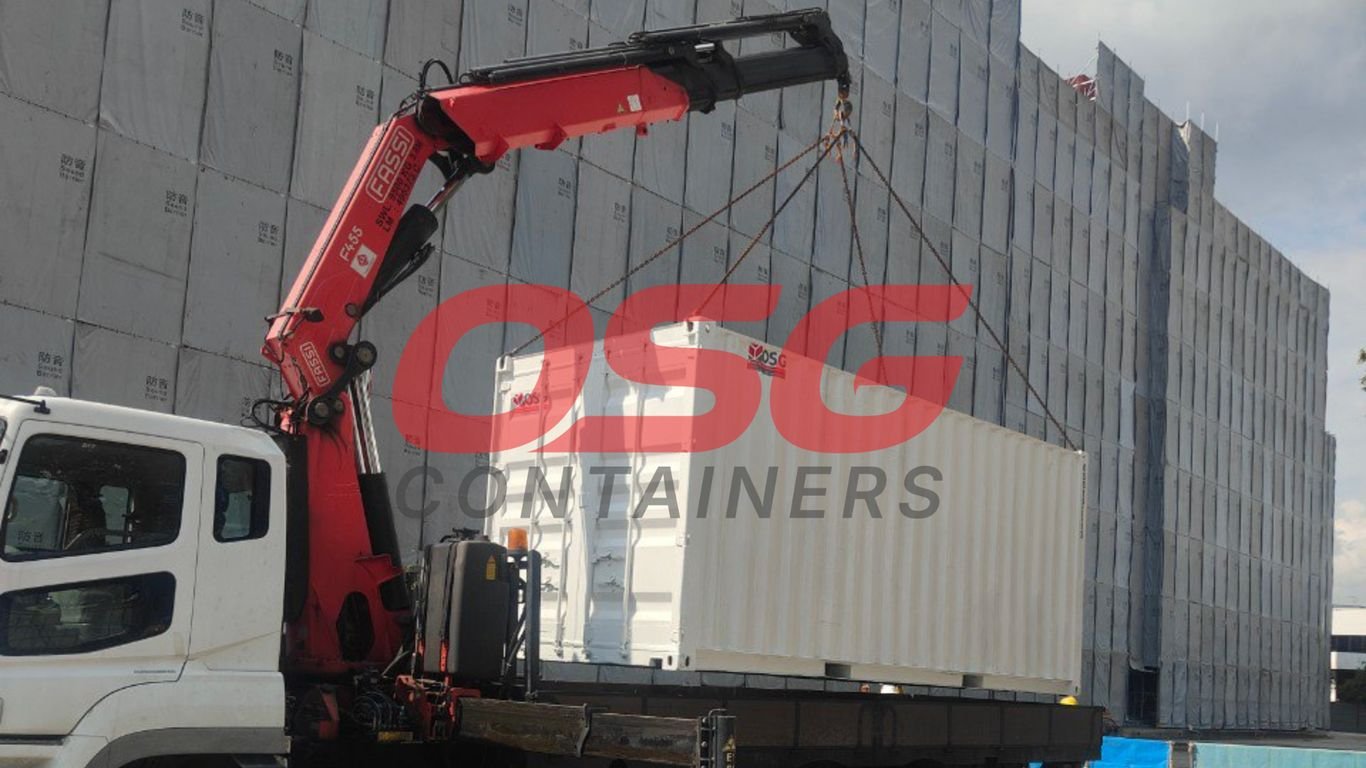
So, you’re looking into getting a cargo container, huh? It’s a big decision, and picking the right size can really make a difference. Whether you’re moving a few things or setting up a whole operation, knowing the difference between a 20-foot and a 40-foot container is key. Let’s break down what you need to consider so you don’t end up with too much or too little space. It’s all about matching the container to your actual needs.
Key Takeaways
- A 20-foot cargo container is best for dense, heavy items and situations where space is tight or your budget is a primary concern.
- A 40-foot cargo container is ideal for large volumes, bulky goods, and big projects where maximizing space is more important than tight access.
- Consider the interior space and actual usable cubic feet, not just the exterior dimensions, when planning your cargo.
- High cube options offer extra height, which can be beneficial for storing tall items or creating more comfortable interior spaces like offices.
- The cost difference between 20ft and 40ft containers isn’t double, but the cost per cubic meter can be more favorable for the 40ft when shipping large quantities.
Understanding Cargo Container Dimensions
Choosing the right shipping container size has a big effect on how your cargo is packed, shipped, and delivered. So before you pick an osg container, it helps to really get a handle on how 20 foot and 40 foot options compare for length, width, height, and what actually fits inside.
Comparing Length, Width, and Height
The biggest difference between 20 foot and 40 foot containers is, not surprisingly, the length. But other measurements stay pretty close. Here’s a quick look at the key stats:
| Container Size | Exterior Length | Exterior Width | Exterior Height | Interior Length | Interior Width | Interior Height |
|---|---|---|---|---|---|---|
| 20 ft container | 19’10” | 8’ 0” | 8’6” | 19’3” | 7’7” | 7’8” |
| 40 ft container | 40’ 0” | 8’ 0” | 8’6” | 39’4” | 7’7” | 7’10” |
- Here’s what stands out:
- Both container types have pretty much the same width and height—easy for stacking and transport.
- Interior lengths are always a bit less than outside, thanks to steel walls.
- Door openings are typically 7’8” wide by 7’5” high on both types.
If you only measure the outside, you might overestimate what actually fits. Make sure you know interior dimensions before planning your load.
Interior Versus Exterior Measurements
What you see on the outside isn’t always what you get inside. The steel walls, doors, and sometimes flooring eat up a few inches all around. This can affect how pallets, boxes, or machinery actually slide in. Especially for folks needing just a bit more headroom or length, always double-check the inside figures before buying or renting any osg container.
Quick pointers:
- Use interior dimensions for packing/lashing plans.
- Don’t forget to leave a little wiggle room around door frames when loading wide equipment.
- Double-check height limits if you’re using raised pallets or larger goods.
The Impact of Standard vs. High Cube Options
Both 20 ft and 40 ft shipping container sizes come in ‘standard’ and ‘high cube’ variants. High cube containers are about a foot taller—so 9’6” vs 8’6” exterior height—and give you more vertical storage. Useful for:
- Bulky cargo or stacking lighter goods higher
- Businesses using containers as workspaces or pop-up shops
- Certain machinery, tall pallet loads, or custom shelving
For most standard shipments, traditional heights do the trick. But when in doubt, consider whether a high cube osg container can make your loadout simpler and safer.
Choosing between these shipping container sizes? Don’t just focus on the outside. Small differences inside and those extra high cube inches can change what gets shipped—and how easily it all fits.
Assessing Cargo Container Capacity
When you’re figuring out which container size to go with, capacity is a big deal. It’s not just about how much stuff you can cram in there, but also how much it weighs. You don’t want to get halfway through loading and realize you’ve hit the limit, or worse, overload it and cause problems down the road.
Payload Capacity for Heavy Goods
This is all about the maximum weight your container can carry. Think of it as the "stuff" weight, not including the container itself. For a standard 20-foot container, you’re looking at a payload capacity of around 21,700 kg (about 47,840 lbs). The bigger 40-foot container can handle more, typically around 26,700 kg (roughly 58,900 lbs).
It’s super important to know the weight of your goods. If you’re shipping dense items like machinery, metal parts, or even a lot of books, you’ll hit the weight limit faster than you might think. Always double-check your cargo’s weight before you start loading.
Cubic Capacity for Voluminous Shipments
This one’s about space. How much room do you actually have inside? A 20-foot container offers about 33 cubic meters (around 1,172 cubic feet) of space. That’s enough for things like the contents of a small apartment or a decent amount of furniture. The 40-foot container doubles that, giving you roughly 67 cubic meters (about 2,389 cubic feet). This is where you’d put larger items, multiple vehicles, or a whole house’s worth of stuff.
When you’re planning your shipment, it’s not just about fitting everything in. You also need to think about how you’ll arrange it. Stuffing things in randomly might seem like a good idea at first, but it can lead to wasted space and make unloading a real headache. Thinking about how things stack and fit together from the start saves a lot of trouble later.
Pallet Configurations for Each Size
Pallets are a common way to organize cargo, so knowing how many fit is key. A 20-foot container can usually hold about 10 standard pallets. If you’re using the smaller Euro pallets, you might squeeze in a couple more. For the 40-foot container, you’re looking at around 20 standard pallets, or up to 24 Euro pallets. This makes a big difference if your goods are already on pallets or if you plan to ship them that way. It’s a good way to visualize how much product you can move in one go.
When a 20 Foot Cargo Container Is Ideal
So, you’re looking at shipping containers and wondering which size is the right fit. Let’s talk about the trusty 20 foot container. This option really shines when your cargo is heavy but doesn’t take up a ton of space. Think of things like machinery, steel parts, or even building materials. These items pack a punch in terms of weight, and a 20 foot container is built to handle that load efficiently. It’s not about filling every inch of space, but about getting dense, heavy goods from point A to point B without breaking the bank or the container.
Suitable for Dense and Heavy Cargo
When weight is the main concern, the 20 foot container is your go-to. Its design allows for a high payload capacity relative to its size. This means you can load it up with some seriously heavy stuff without worrying about exceeding limits. It’s a smart choice for industries that deal with raw materials or manufactured components that are dense.
Navigating Limited Space and Access
Sometimes, where you need to put the container is just as important as what you’re putting in it. If you’re working with a tight loading dock, a smaller storage yard, or a location with tricky access roads, a 20 foot container is much easier to maneuver and place. It simply takes up less room, making it a practical solution when space is at a premium. This can also speed up the loading and unloading process because everything is more accessible.
Budget-Conscious Shipping Solutions
Let’s be real, cost is always a factor. For smaller, heavier shipments, a 20 foot container often presents a more economical choice. The purchase price is lower than its larger counterpart, and shipping costs can also be less due to its smaller footprint and lighter weight. It’s a solid option if you don’t need the vast volume of a 40 foot container but still need to move substantial weight.
The 20 foot container is a workhorse for specific types of cargo. It’s not about having the most space, but about having the right space for heavy, dense items where maneuverability and cost are key considerations.
Here’s a quick look at why it’s a good pick:
- Heavy Goods: Ideal for items like metal coils, engines, or large tools.
- Tight Spots: Perfect for urban deliveries or sites with limited maneuvering room.
- Cost Savings: Often cheaper to buy, ship, and store than larger containers.
- Efficient Loading: Easier to manage loading and unloading when space is restricted.
When a 40 Foot Cargo Container Is the Better Choice
Accommodating Large Volumes and Bulky Items
A cont 40 feet really shines when you need to ship a mountain of stuff—big, awkward, or just a ton of little packages. If your business deals with large quantities of lightweight goods, a 40-foot container can save you space and money.
| Container Size | Internal Volume (m³) | Typical Uses |
|---|---|---|
| 20-foot | 33 | Heavy, dense items (machinery, metal parts) |
| 40-foot | 67 | Bulky, voluminous goods (furniture, textiles) |
- Fits up to twice the volume of a standard 20-footer
- Ideal for shipping bulky yet light items like furniture or packaged products
- More practical for consolidating items from several locations
With a cont 40 feet, you’ve got the room to avoid cramming goods, which lowers your risk of damage during transport.
Facilitating Large-Scale Projects and Custom Builds
If you’re setting up a big project—think temporary worksite offices, modular buildings, or container homes—a cont 40 feet is often the go-to. There’s simply more room and flexibility compared to any smaller option.
- Works as a ground-level office or even a split unit (office + storage)
- Excellent for custom container builds like pop-up retail or food stands
- Supports larger design features: multiple rooms, equipment space, better flow
Optimizing Cost Per Cubic Meter for Bulk Shipments
Even though a 40-foot container costs more upfront, its larger capacity brings long-term savings.
| Container Size | Average Shipping Cost | Cost Per Cubic Meter (
USD) |
|——————|———————-|————————|
| 20-foot | $2,000 – $3,000 | $60 – $90 |
| 40-foot | $2,600 – $3,900 | $39 – $58 |
- Lower cost per cubic meter
- More efficient for long-haul or international routes
- Fewer containers needed, reducing handling fees and paperwork
For companies shipping substantial quantities regularly, choosing cont 40 feet can keep cost per unit down, maximizing every shipment.
Logistical Considerations for Cargo Containers
So, you’ve got your cargo, and you’re thinking about containers. But before you just grab one, let’s talk about the stuff that actually happens on the ground – the logistics. It’s not just about how much fits inside; it’s about how you get it there and where it’s going to end up.
Loading and Unloading Time Differences
When it comes to getting stuff in and out of a container, size really does matter. A 20-foot container is generally quicker to load and unload. Think about it – less space to maneuver in, fewer items to move. We’re talking maybe an hour to an hour and a half if things are organized well. Now, a 40-foot container? That’s a whole different ballgame. It can take anywhere from an hour and a half to two and a half hours, sometimes more, especially if you’ve got big, awkward items or if the cargo isn’t packed smartly. It just takes more time and effort to get to everything.
Site Requirements for Placement and Access
Where are you putting this container? That’s a big question. A 40-foot container needs significantly more space, not just for the container itself but also for the equipment needed to move it. You need to make sure there’s enough room for a forklift or a crane to get close enough without bumping into anything. Access roads also need to be wide enough for the truck carrying the container. A 20-foot container is a lot more forgiving. It can fit into tighter spots, and getting equipment to it is usually less of a headache. So, if your site is a bit cramped or hard to reach, the smaller container might be your only option.
Transportation Costs and Weight Implications
This is where things can get tricky. While a 40-foot container holds almost double the space of a 20-foot, it doesn’t cost double. In fact, the cost per cubic meter for shipping is often better with the 40-footer, especially for bulkier, lighter goods. However, the actual shipping cost for a 40-foot container will be higher than for a 20-foot one, simply because it’s bigger and heavier. Plus, you have to consider weight limits. If you’re shipping really dense, heavy items, a 20-foot container might be better because you can max out its payload capacity without hitting road weight restrictions that a fully loaded 40-footer might encounter. Always check the specific weight limits for your shipping route.
Choosing the right container size isn’t just about fitting your goods; it’s about making sure the entire process, from loading dock to final destination, runs as smoothly and cost-effectively as possible. Think about the space you have, the equipment you’ll need, and any weight restrictions along the way.
Cost Factors in Cargo Container Selection
When you’re picking between a 20-foot and a 40-foot container, the starting point is usually the upfront price. A 20-foot container is cheaper outright, but the 40-foot option gives you almost double the space for just about 30% more money. This is kind of counterintuitive—bigger should cost way more, right? But it doesn’t work that way with containers.
Here’s a ballpark price table for new and used containers:
| Container Type | Used Price Range | New Price Range |
|---|---|---|
| 20-foot | $1,500 – $3,000 | $2,500 – $5,000 |
| 40-foot | $2,000 – $4,500 | $3,500 – $6,500 |
A few things that can push prices up or down:
- Whether you choose standard or high cube
- Local market demand and availability
- Special features, like refrigeration or reinforced flooring
It’s not just the size that affects the price—condition and extras matter too. A used 40-footer in rough shape might actually cost less than a brand new 20-footer.
Shipping Cost Analysis
After you buy the container, you’ve still got to pay to move it. Here’s the funny part: 20-foot containers usually cost less to ship simply because they’re lighter and easier to handle. But, if you’re looking at the cost per cubic meter, the 40-footer comes out ahead for bulkier cargo since you’re shipping more volume in one hit.
Key points about shipping costs:
- 20-footers are lighter, so trucking and port fees are usually lower
- For high-volume shipping, 40-footers have a lower cost per cubic foot
- Route and destination matter—a longer trip can make the upcharge for bigger containers less significant
Storage Fees and Budget Alignment
Don’t forget about storage! The bigger your container, the more it’s going to cost if you have to leave it at a port or a storage lot. This can become a real headache for projects on a strict budget.
Common points about storage and budgets:
- 40-foot containers need twice the yard space, so fees can be double
- Many storage providers charge per unit, not per square foot, but special handling for big containers can bring extra fees
- If space is tight at your location, a 20-footer can save you on real estate costs
While 40-foot containers give the best deal per cubic meter, be careful: site limitations and long-term storage can turn those savings upside down if you aren’t planning carefully.
Wrapping It Up: Which Container is Right for You?
So, when it comes down to it, picking between a 20-foot and a 40-foot container really just depends on what you’re trying to do. If you’ve got a smaller load, maybe just some stuff for a renovation or seasonal inventory, and space is tight, the 20-footer is probably your best bet. It’s easier to place and usually costs less. But if you’re moving a ton of stuff, like for a big business inventory, or planning to build something cool like an office or workshop out of it, then that 40-foot container gives you way more room to work with. Think about how much you need to move, where it needs to go, and what your budget looks like. Getting that right will save you headaches and money down the road.
Frequently Asked Questions
What’s the main difference between a 20-foot and a 40-foot container?
The biggest difference is the length! A 40-foot container is almost twice as long as a 20-foot container, meaning it can hold a lot more stuff. They usually have the same width and height, though.
When should I choose a 20-foot container?
A 20-foot container is a great choice if you have heavy but not super bulky items, like machinery or building materials. It’s also ideal if you have limited space for delivery or storage, or if you’re trying to save money on shipping.
When is a 40-foot container a better option?
Go for a 40-foot container if you have a lot of items, especially if they are large or bulky, like furniture or textiles. It’s also good for big projects that need extra space, like temporary offices or storage buildings, and can be cheaper per item when shipping a lot.
Do ‘High Cube’ containers offer more space?
Yes, ‘High Cube’ containers are taller than standard ones. This extra foot of height can make a big difference if you’re storing tall equipment or want a more comfortable workspace inside.
How many pallets can fit in each container?
A 20-foot container can typically hold about 10 standard pallets, while a 40-foot container can fit around 22 standard pallets. Planning how you load them is key to using the space well.
Is shipping a 40-foot container much more expensive than a 20-foot?
A 40-foot container usually costs more upfront and to ship because it’s bigger and heavier. However, if you’re shipping a lot of items, the cost per item can actually be lower in a 40-foot container, making it more budget-friendly for bulk shipments.