Singapore
 Australia
 Indonesia
 Japan
Japan Malaysia
 New Zealand
 Philippines
 South Korea
 Taiwan
 Thailand
 VIETNAM
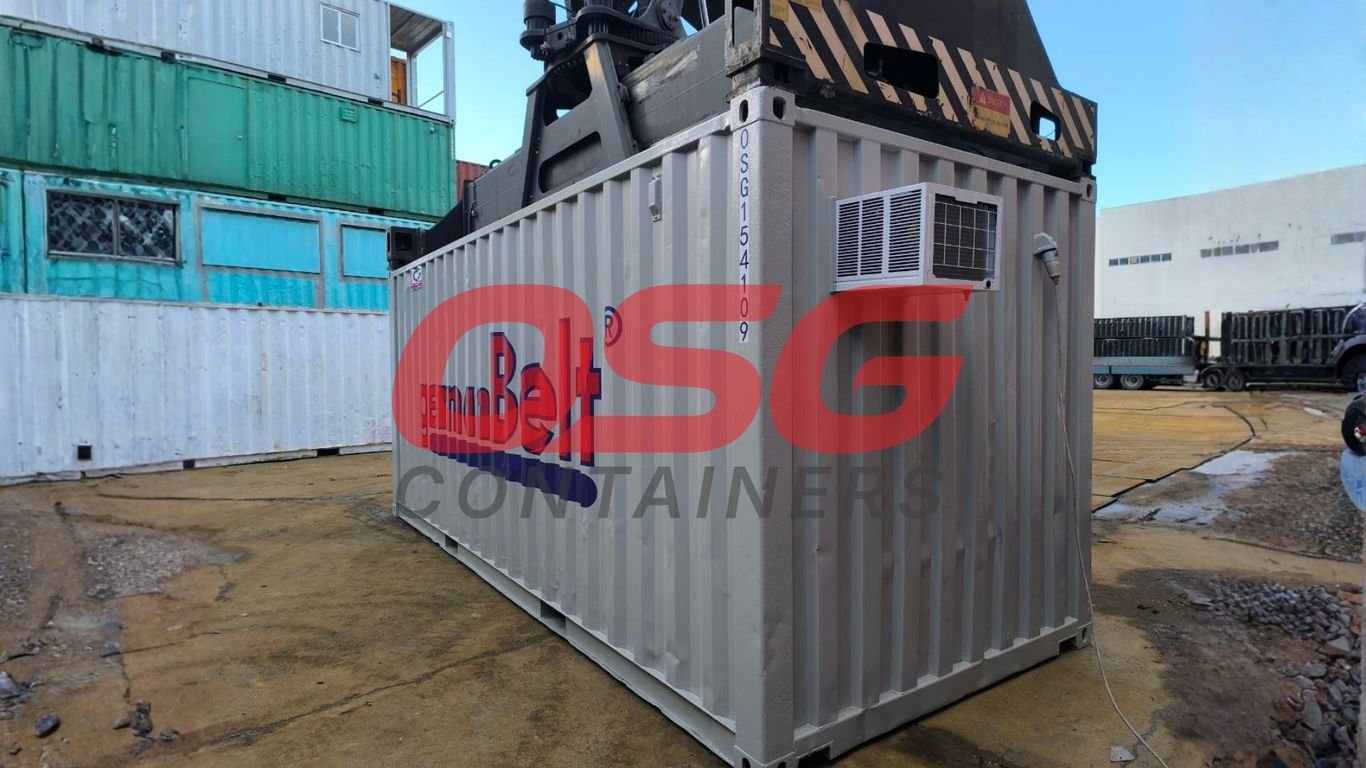
So, you’re wondering about a 20 footer container and what it can actually do? It’s easy to think of them as just big metal boxes, but they’re surprisingly versatile. Whether you’re moving your whole apartment, need some serious business storage, or have a really unique project in mind, these containers pack a punch. We’re going to break down what fits inside, how much it weighs, and even how to pack it efficiently. Let’s get into it.
Key Takeaways
- A standard 20 footer container has internal dimensions of roughly 19.4 feet long, 7.8 feet wide, and 7.9 feet high, offering about 33 cubic meters of space.
- These containers can hold a significant amount of weight, with payload capacities often exceeding 40,000 lbs, but always check the specific limits.
- Beyond just moving goods, a 20 footer container can be used for residential moves, business storage, and even creative projects like tiny homes or workshops.
- Palletizing is key for efficiency; you can fit around 10-11 standard American or Euro pallets, but this can change with different pallet sizes or stacking methods.
- High cube variations offer extra vertical space, which is useful for taller items, while specialized containers like double-door or flat rack offer unique loading and transport solutions.
Understanding the Dimensions of a 20 Footer Container
So, you’re looking at a 20-foot shipping container and wondering what exactly fits inside? It’s a pretty common size, often called a ‘standard’ container, and knowing its measurements is key to figuring out if it’s the right choice for your stuff. Think of it like packing for a trip – you need to know how big your suitcase is before you start stuffing things in.
Exterior Measurements of a 20 Footer Container
When you see a 20-footer sitting there, its outside dimensions are pretty straightforward. It’s built to standard specifications, so you can expect it to be about 20 feet long. The width is usually around 8 feet, and the height is typically 8 feet and 6 inches. These outside measurements are important for transport and placement, making sure it fits on trucks, trains, and ships, and also that it can get through gates or down narrow roads.
| Measurement | Feet & Inches | Meters |
|---|---|---|
| Length | 20′ | 6.06 m |
| Width | 8′ | 2.44 m |
| Height | 8′ 6" | 2.59 m |
Interior Space: What Fits Inside a 20 Footer Container
Now, let’s talk about the inside. Because of the container’s walls, the usable space is a bit less than the outside. You’ve got roughly 19 feet and 4 inches of length, about 7 feet and 8 inches of width, and just under 8 feet of height. This is where the real magic happens – figuring out how much you can actually pack in there.
- Length: Around 19′ 4" (5.89 m)
- Width: Approximately 7′ 8" (2.33 m)
- Height: Roughly 7′ 10" (2.40 m)
Remember, these are the general interior dimensions. The exact measurements can vary slightly depending on the manufacturer and the thickness of the container’s walls. Always double-check if you have very specific space requirements.
High Cube Variations: Maximizing Vertical Space
Sometimes, a standard container just isn’t quite tall enough. That’s where the ‘High Cube’ version comes in. It’s still 20 feet long and 8 feet wide, but it’s about a foot taller. This extra vertical space can make a big difference, especially if you’re shipping items that are awkwardly shaped or need a bit more room to stand up straight. It’s a simple change that can really boost how much you can fit, especially for taller goods.
- Standard Height: Around 8′ 6" exterior (2.59 m)
- High Cube Height: About 9′ 6" exterior (2.89 m)
Choosing between a standard and a High Cube 20-footer often comes down to the specific items you need to transport. That extra foot of height can be surprisingly useful.
Calculating the Capacity of Your 20 Footer Container
So, you’ve got a 20-foot container and you’re wondering just how much stuff you can actually cram into it. It’s not just about the length, you know. We need to talk about volume and weight, because those are the real limits.
Understanding Cubic Meters (CBM) for a 20 Footer Container
Cubic meters, or CBM, is basically the standard way to measure the space inside a container. Think of it as the total volume available for your goods. For a standard 20-foot container, you’re generally looking at around 33 cubic meters of space. This is calculated by multiplying the internal length, width, and height. For example, a container with internal dimensions of roughly 5.89 meters long, 2.33 meters wide, and 2.4 meters high gives you that 33 CBM. It’s important to remember that you might not be able to use every single bit of that space, though. Things like how you stack your items, needing space to get things in and out, or just making sure nothing gets damaged can eat into that usable volume.
Weight Limits: Tare Weight vs. Payload Capacity
Beyond just space, there’s the weight limit. Every container has a tare weight, which is how much the container itself weighs. Then there’s the payload capacity – that’s the maximum weight of goods you can actually put inside. For a standard 20-footer, the tare weight is usually around 5,000 to 6,000 pounds (about 2,300 to 2,700 kg). The maximum payload can be quite a bit more, often in the range of 45,000 to 50,000 pounds (around 20,000 to 23,000 kg). Always check the specific container’s rating, because overloading is a big no-no and can cause serious problems. You don’t want your container to be too heavy to be lifted or, worse, to break.
Optimizing Space: How Much Can You Really Fit?
This is where it gets interesting. While you have about 33 CBM, how much you can practically fit depends on what you’re packing. If you’re shipping things like furniture or appliances, you’ll have gaps and awkward shapes to deal with. If you’re packing smaller, uniform items, you can probably fill it much more efficiently. For instance, you might be able to fit the contents of a one-bedroom apartment, or maybe even a couple of cars if you pack them right. It’s also about how you load it. Stacking items carefully, using dunnage to fill voids, and planning your loading sequence can make a huge difference. Don’t forget about weight, though. You might have all the space in the world, but if your cargo is super dense, you could hit the weight limit before you fill it up.
Here’s a quick look at some typical capacities:
| Item Type | Approximate Quantity | Notes |
|---|---|---|
| Euro Pallets | 11 | Standard 1.2m x 0.8m |
| American Pallets | 10 | Standard 40" x 48" |
| Refrigerators | ~50 | Varies greatly by size and model |
| Televisions | ~400 | Assumes smaller, older CRT-style TVs |
Remember that these are just estimates. The actual amount you can fit will always depend on the specific dimensions and weight of your items, as well as how efficiently you can pack them. It’s always a good idea to measure and weigh your cargo beforehand to avoid surprises.
Versatile Applications for a 20 Footer Container
So, you’ve got this 20-foot container, and you’re probably thinking, ‘What can I actually do with it?’ Well, turns out, quite a lot. These aren’t just for shipping stuff across the ocean, though that’s a big part of it. Think of it as a really sturdy, portable box that can solve a bunch of different problems.
Residential Moves: From Apartments to Cars
Moving house? Whether you’re downsizing from a big place or just need to store some things temporarily, a 20-footer can be a lifesaver. It’s roughly the size of a large room, so it can hold furniture, appliances, boxes, and all those bits and bobs you accumulate. It’s like having a private storage unit delivered right to your door. Plus, if you’re moving a car, some smaller vehicles can actually fit inside, especially if you pack smart. This makes it a pretty neat option for relocating your entire life, or at least a significant chunk of it.
Business Storage and Logistics Solutions
For businesses, these containers are workhorses. Need extra space for inventory? Instead of a costly warehouse expansion, you can get a container delivered to your site for on-demand storage. This is super handy for seasonal stock, equipment, or even as a temporary office on a construction site. Many companies use them for their supply chain, too. They can be used for:
- Storing raw materials
- Holding finished goods before shipment
- Creating pop-up shops or event spaces
- Providing secure storage for tools and machinery
And if you’re looking at container renting for a short-term project or to test out a new storage strategy, it’s a flexible way to manage your assets without a huge upfront investment.
Beyond Traditional Cargo: Unique Uses
People get really creative with these containers. We’re talking about turning them into:
- Tiny homes or backyard offices: With some modifications, they become surprisingly livable spaces.
- Workshops or studios: Artists and craftspeople use them for dedicated creative zones.
- Emergency shelters: In disaster relief situations, they offer quick, sturdy housing.
- Specialized storage: Think wine cellars, archives, or even housing for sensitive equipment.
The adaptability of a 20-foot container means it’s more than just a box for shipping. It’s a modular building block that can be repurposed for countless needs, from personal projects to large-scale commercial operations. Its robust construction and standardized size make it a reliable foundation for almost any application you can imagine.
Seriously, the possibilities are pretty wild. It just goes to show that a simple metal box can be incredibly useful if you think outside the shipping lanes.
Palletization Strategies for a 20 Footer Container
So, you’ve got a 20-foot container and you’re thinking about how to pack it efficiently, especially if you’re dealing with pallets. This is where smart planning really pays off. Getting the most out of your container often comes down to how you arrange those pallets.
Fitting Standard Euro Pallets
When you’re working with Euro pallets, which typically measure 1.2 meters by 0.8 meters, you can fit quite a few inside a standard 20-footer. The internal dimensions of the container allow for a pretty good arrangement. You can usually fit about 11 Euro pallets on the floor of a 20-foot container. This is achieved by placing them lengthwise and widthwise in a way that maximizes the available floor space without too much wasted room. It’s a tight fit, but it’s a common and effective way to pack.
Accommodating American Pallets
American pallets, often called GMA pallets, are a bit larger, usually around 40 inches by 48 inches (which is about 1.016 meters by 1.219 meters). Because they’re a different size, you can’t quite fit as many as you can with Euro pallets. For American pallets, you’re generally looking at fitting around 10 units on the floor of a 20-foot container. The arrangement might involve placing them all in the same orientation to make the best use of the width and length.
Maximizing Pallet Count with Oversized Units
Sometimes, you might have pallets that are larger than the standard Euro or American sizes. These could be custom-built or designed for specific types of goods. If you’re using oversized pallets, say around 220 cm (about 86.6 inches) on one side, your pallet count will naturally go down. In a 20-foot container, you might be able to fit about 8 of these larger pallets. It really depends on the exact dimensions and how they can be staggered or arranged to avoid blocking the doors or creating unstable loads. It’s always a good idea to measure your specific oversized pallets and do a test layout if possible.
When planning your pallet load, remember that the actual usable space can be affected by things like the thickness of the pallet itself, how you secure the load, and the need to leave a small amount of space for forklifts or pallet jacks to maneuver during loading and unloading. Don’t forget to check the weight limits too; you might be able to fit more pallets physically, but the total weight could exceed the container’s capacity.
Types of 20 Footer Containers Available
So, you’ve decided a 20 ft container is the way to go. That’s a solid choice for a lot of jobs, but did you know they aren’t all exactly the same? When you’re looking to buy or rent, you’ll run into a few different kinds. It’s not just about new versus used, though that’s a big one. There are also variations that give you a bit more space or are built for specific tasks.
New vs. Used Containers: Pros and Cons
This is probably the first decision most people make. A new container, often called ‘one-trip’, has only made one journey from the factory. They’re in pristine condition, no dents, no rust, and they’ll last you a long time. The downside? They cost more upfront. Used containers, on the other hand, have seen some action. They might have a few dings, some paint chips, maybe a bit of rust, but they’re significantly cheaper. For many storage or basic transport needs, a good quality used container is perfectly fine and saves a good chunk of change.
Here’s a quick rundown:
- New (One-Trip):
- Excellent condition, minimal wear.
- Longest lifespan.
- Higher initial cost.
- Used (WWT – Wind and Watertight):
- Visible signs of wear (dents, rust).
- Lower cost.
- Still structurally sound for most uses.
- Used (Cargo Worthy):
- Inspected and certified for shipping.
- Good balance of cost and condition.
Specialized Containers: Double Door and Flat Rack Options
Beyond the standard box, there are containers designed for specific challenges. Need to load from both ends? A double-door container, sometimes called a ‘tunnel’ container, has doors on both the front and back. This makes loading and unloading much faster, especially if you need to drive equipment straight through. Then there are flat racks. These aren’t really ‘boxes’ at all – they’re just the base and sides, with no roof. They’re perfect for really oversized or heavy items that wouldn’t fit in a standard 20 ft or even a 40 feet container, like large machinery, boats, or construction materials. You can’t really compare a flat rack to a standard container; they serve entirely different purposes.
Choosing the Right 20 Footer Container for Your Needs
When you’re picking out your 20 ft container, think about what you’re putting inside and where it’s going. If you’re storing furniture for a move, a standard used container might be just the ticket. If you’re shipping delicate electronics, maybe a new one is worth the investment. For those really awkward, bulky items, you might even need to look beyond the 20 ft container and consider a 40 feet container or a specialized unit like a flat rack. Always check the container’s condition, especially if you’re buying used. Make sure it’s wind and watertight, and if you plan to ship with it, ensure it’s cargo-worthy. Don’t forget to factor in the weight limits too – a 40 feet container offers more capacity, but a 20 ft is often more manageable and cost-effective for smaller loads.
The world of shipping containers isn’t just about one size fits all. While the 20 ft container is a workhorse, understanding the different types available, from new to used, and specialized options like double doors or flat racks, helps you make the best choice for your specific project. It’s about matching the container to the cargo, not the other way around.
So, What’s the Verdict?
After looking at all the numbers and what can actually fit inside, it’s pretty clear that a 20-foot container is a seriously handy piece of equipment. Whether you’re moving a small apartment’s worth of stuff, need to store business inventory, or even transport a couple of cars, this box can handle it. It’s not just about the size, but how you pack it. You can fit a surprising amount, from furniture to thousands of smaller items. It’s a solid, dependable option for a lot of different jobs, proving that sometimes, a standard-sized box can really deliver.
Frequently Asked Questions
What are the exact outside and inside measurements of a 20-foot container?
A standard 20-foot container is about 20 feet long, 8 feet wide, and 8.5 feet tall on the outside. Inside, it’s a bit smaller, around 19.5 feet long, 7.7 feet wide, and 7.9 feet tall. Think of it like a big metal box, but the walls take up a little bit of space.
How much stuff can actually fit inside a 20-foot container?
You can fit about 33 cubic meters of stuff in a 20-foot container. That’s a lot! It’s like holding the contents of a small apartment, or maybe 1-2 cars, or even around 400 TVs. Just remember, you can’t always fill every single bit of space because of how you pack things and to make sure nothing gets damaged.
What’s the difference between a standard 20-foot container and a ‘High Cube’ one?
A ‘High Cube’ container is basically a standard 20-footer, but it’s taller! It gives you about an extra foot of height inside. This is super helpful if you need to ship things that are tall, like pipes or certain types of machinery. It means you can use the vertical space better.
How many pallets can I fit into a 20-foot container?
You can fit about 10 standard American pallets (around 40×48 inches) or 11 European pallets (around 32×48 inches) on the floor of a 20-foot container. If you have bigger, oversized pallets, you might fit around 8 of those.
What does ‘CBM’ mean and how do I figure it out for a container?
CBM stands for Cubic Meter. It’s just a way to measure the space inside the container. To find it, you measure the inside length, width, and height of the container in meters and then multiply those three numbers together. For a standard 20-footer, it usually comes out to about 33 CBM.
Can I use a 20-foot container for something other than shipping goods?
Absolutely! People use 20-foot containers for all sorts of things. They’re great for on-site storage for businesses or even for moving homes. Some folks even turn them into cool tiny homes, offices, or workshops. Their strong, boxy shape makes them really adaptable for many uses beyond just carrying cargo.