Singapore
 Australia
 Indonesia
 Japan
Japan Malaysia
 New Zealand
 Philippines
 South Korea
 Taiwan
 Thailand
 VIETNAM

So, you’re looking into shipping containers, specifically the 20-foot kind? These are super common, like the workhorses you see on ships. They’re a good middle ground – not too big, not too small, and they fit a decent amount of stuff. But what exactly are the numbers? We’re going to break down the dimensions, how much they weigh, and what they can actually hold, so you know what you’re dealing with.
Key Takeaways
- A standard 20-foot sea container has exterior dimensions of about 20 ft long, 8 ft wide, and 8.5 ft high.
- Inside, you’ve got a bit less space, roughly 19.3 ft long, 7.7 ft wide, and 7.8 ft high, giving you about 33 cubic meters of room.
- The empty weight, or tare weight, of a 20-foot container is usually around 2,300 kg (about 5,000 lbs).
- The maximum weight a 20-foot container can carry, including its own weight, is generally around 24,000 kg (about 53,000 lbs).
- You can typically fit about 10 to 11 standard pallets inside a 20-foot container, depending on their size and how you arrange them.
1. Exterior Dimensions
When you’re looking at shipping containers, the first thing you’ll probably notice is their size. For a standard 20-foot container, the outside measurements are pretty consistent. These external dimensions are what determine if the container will fit on a ship, a train, or a truck, and also if it can get to its final destination.
Here’s a breakdown of the typical exterior measurements for a 20-foot container:
| Dimension | Measurement (Feet) | Measurement (Meters) |
|---|---|---|
| Length | 20′ | 6.06 m |
| Width | 8′ | 2.44 m |
| Height | 8′ 6" | 2.59 m |
It’s important to remember that these are the outside dimensions. The actual space you have inside will be a bit less due to the thickness of the container walls, floor, and roof. Think of it like buying a new appliance – the box it comes in is bigger than the appliance itself.
These standard exterior dimensions are set by international organizations to make sure containers can be handled and stacked uniformly across the globe. This standardization is a big reason why international shipping works as smoothly as it does.
So, while the 20-foot length is the most obvious number, the width and height are just as important for logistics and handling. They’re designed to fit snugly together on ships and in yards, making the most of the available space.
2. Interior Dimensions
So, you’ve got the outside measurements of a 20-foot container, but what about the space you can actually use inside? That’s where the interior dimensions come in. Think of it like buying a house – the listed square footage is usually the usable living space, not including the walls. The same idea applies here.
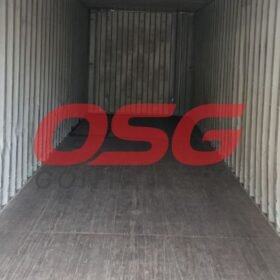
The inside of a standard 20-foot container is where the real magic happens for your cargo. It’s a bit smaller than the exterior, naturally, because the container walls have to be made of something, right? These walls are typically steel, and they take up a few inches all around.
Here’s a breakdown of what you can expect inside a typical 20-foot container:
- Length: Around 19 feet 4 inches (or about 5.89 meters).
- Width: Roughly 7 feet 8 inches (or about 2.33 meters).
- Height: Approximately 7 feet 10 inches (or about 2.4 meters).
These numbers might seem a little abstract, so let’s put them into perspective. Imagine trying to fit furniture or boxes. You’ve got a decent amount of room, but you’re not going to be able to stretch out like you’re in a ballroom. It’s a snug, efficient space designed for maximizing cargo.
Keep in mind that these are general figures. The exact interior dimensions can vary slightly between manufacturers due to the thickness of the steel used for the walls and floor. Always double-check if you have very specific size requirements for your goods.
When you’re planning what to put inside, it’s not just about the length, width, and height. You also have to think about how you’ll load it. Will you be using pallets? Do you need to leave space for forklifts or hand trucks? All these things can affect how much you can practically fit, even if the numbers say there’s more room.
3. Standard Container Dimensions
When you’re looking at shipping containers, the 20-foot standard container is probably the one you’ll see most often. It’s like the everyday car of the shipping world – reliable and gets the job done for a lot of different needs. These are built to strict ISO standards, meaning they’re pretty much the same no matter who made them or where they’re going.
The standard 20-foot shipping container has exterior dimensions of 20 feet long, 8 feet wide, and 8 feet 6 inches high. This size is a good balance; it’s big enough to hold a decent amount of stuff but still manageable for transport and fitting into tight spots.
Here’s a quick look at the typical measurements:
| Dimension | Feet | Meters |
|---|---|---|
| Exterior Length | 20′ | 6.06 m |
| Exterior Width | 8′ | 2.44 m |
| Exterior Height | 8′ 6" | 2.59 m |
Inside, you get a bit less space because of the container walls, but it’s still a good amount. The interior length is usually around 19 feet 4 inches, the width about 7 feet 8 inches, and the height around 7 feet 10 inches. This is where you’ll actually be fitting your goods.
While these are the standard dimensions, remember that the exact interior measurements can vary slightly. This is due to the thickness of the container’s walls, which can differ a bit between manufacturers. Always check the specific internal dimensions if you have very precise space requirements.
These containers are super versatile. You can use them for all sorts of things, from household goods to industrial parts. If you need something a bit different, like for oversized cargo, you might look at specialized containers like open top containers, but for general shipping, the standard 20-footer is usually the go-to choice.
4. High Cube Container Dimensions
So, you’ve probably seen the standard 20-foot container, right? Well, a High Cube version is pretty much the same, but with a little extra headroom. Think of it as the standard container’s taller sibling.
The main difference is that extra foot of height, which can make a surprising amount of difference for certain types of cargo. This extra space is a game-changer if you’re shipping things that are a bit too tall for a regular container, like machinery, pipes, or even some vehicles. It also means you can stack more stuff inside, which is always a win when you’re trying to maximize your shipping space.
Here’s a quick look at how the dimensions stack up:
| Feature | Standard 20ft Container | High Cube 20ft Container |
|---|---|---|
| Exterior Height | 8 ft. 6 in. (2.59 m) | 9 ft. 6 in. (2.89 m) |
| Interior Height | 7 ft. 10 in. (2.4 m) | 8 ft. 10 in. (2.7 m) |
| Volume (CBM) | 33.18 CBM | 37.28 CBM |
While the length and width stay the same as a standard 20-foot container, that extra height in the High Cube really bumps up the total volume you can fit inside. It’s not a massive change in overall footprint, but that vertical space can be exactly what you need.
This extra height means you get more cubic meters of storage space compared to a standard container. It’s not just about fitting taller items; it’s also about optimizing the space you have. You might be able to fit more boxes or goods by stacking them higher, which can save you money on shipping costs if you can fill that extra space effectively.
5. Reefer Container Dimensions
When you need to ship things that can’t just sit around at room temperature, like food or certain medicines, you’ll be looking at a reefer container. These aren’t your standard metal boxes; they’ve got a whole refrigeration unit built into one end. This extra gear means they’re heavier than regular containers.
A typical 20 ft container that’s a reefer usually weighs around 6,791 lbs (about 3,080 kg) when it’s empty. That’s a good chunk more than a dry van, which is why you need to be mindful of the total weight limits.
Here’s a quick look at what you can expect:
- Refrigeration Unit: This is the key feature, allowing for precise temperature control.
- Insulation: The walls are thicker and insulated to keep the temperature stable.
- Power Supply: Needs a power source, usually from the ship or a generator.
Because of the added weight from the refrigeration system, the amount of cargo you can actually put inside (the payload) is a bit less compared to a standard 20 ft container. However, the maximum weight the container can handle when fully loaded (gross weight) is generally similar to other types, around 67,200 lbs (30,480 kg). It’s always smart to check the specific weight limits for the reefer you’re using, though, to make sure you’re not overloading it.
The extra weight of the refrigeration unit is a significant factor. It impacts how much cargo you can load while staying within legal and safe weight limits for transport. Planning your shipment carefully is key to avoid issues.
6. Tare Weight
So, what exactly is tare weight? Simply put, it’s the weight of the container itself when it’s completely empty. Think of it as the container’s own personal weight before you start loading anything into it. This number is super important because it’s the starting point for figuring out how much weight you can actually put inside.
For a standard 20-foot container, the tare weight usually hovers around 2,300 kg (about 5,070 lbs). But, just like people, containers aren’t all exactly the same. The exact tare weight can change a bit depending on what the container is made of, how old it is, and even its specific design. For example, a high cube container, which is taller, will weigh a little more because it uses more metal. Even specialized containers like an isotank, designed for liquids, will have a different tare weight due to its unique structure and fittings.
Here’s a quick look at how tare weight can vary:
- Standard 20-Foot Container: Around 2,300 kg (5,070 lbs)
- 20-Foot High Cube Container: Slightly more, often around 2,315 kg (5,100 lbs)
- 20-Foot Reefer (Refrigerated) Container: Significantly heavier due to the cooling unit, typically about 3,080 kg (6,790 lbs)
Knowing the tare weight is more than just a number; it’s a key piece of information for planning your shipment. It directly affects how much cargo you can legally and safely load, and it’s a big part of calculating your total shipping costs and making sure you don’t run into trouble with weight limits during transit.
7. Payload Capacity
So, what exactly is payload capacity? Simply put, it’s the maximum weight of the stuff you can actually put inside the container. Think of it as the container’s carrying limit for your cargo, not including the container itself. This is a super important number because it directly affects how much you can ship and, well, how much it costs.
When you subtract the container’s own weight (that’s the tare weight we talked about) from the absolute maximum weight the container can handle (the gross weight), you get the payload capacity. It’s the net weight of your goods.
Here’s a general idea of what a standard 20-foot container can carry:
| Container Type | Max Payload Capacity (approx.) | Max Payload Capacity (approx.) |
|---|---|---|
| lbs | kg | |
| 20-ft Standard | 47,928 lbs | 21,739 kg |
| 20-ft High Cube | 52,910 lbs | 23,998 kg |
Keep in mind these are typical figures. Different manufacturers might have slightly different specs, and the actual payload can also be limited by the maximum gross weight allowed by the shipping line or local road regulations. It’s always a good idea to double-check the specific container’s documentation and any rules for your route.
The payload capacity is the real money-maker for shippers. It tells you how much product you can move in one go. Getting this number right means you’re not paying for empty space or, worse, overloading and facing fines or safety issues. It’s all about balancing what the container can hold with what the journey allows.
Why does this matter so much? Well, if you’re shipping dense items like metal parts or machinery, you might hit the payload limit before you fill up the container’s volume. For lighter, bulkier goods, you might max out the space first. Understanding the payload capacity helps you plan your shipments more efficiently and avoid surprises.
8. Gross Weight
So, what exactly is gross weight when we’re talking about a 20-foot shipping container? It’s pretty straightforward: it’s the total weight of the container itself, plus everything you’ve packed inside it. Think of it as the grand total when the container is fully loaded and ready to roll.
This number is super important because it’s the absolute maximum weight limit you can hit. Going over this limit isn’t just a bad idea; it’s dangerous and can cause serious problems, from damaging the container and the transport vehicle to creating hazards on roads and bridges. Plus, there are rules and regulations to follow, especially for international shipping.
For a standard 20-foot container, the maximum gross weight usually tops out around 24,000 kilograms, which is about 52,913 pounds. This figure is a key piece of information for anyone involved in shipping, as it dictates how much cargo you can actually put in there.
Here’s a quick look at how it breaks down:
- Tare Weight: This is the weight of the empty container. For a standard 20-footer, it’s typically around 2,300 kg (about 5,071 lbs).
- Payload Capacity: This is the maximum weight of the goods you can load into the container. It’s what’s left after you subtract the tare weight from the gross weight. For a 20-foot container, this can be up to roughly 21,600 kg (around 47,620 lbs).
- Gross Weight: This is the sum of the tare weight and the payload capacity. It’s the ultimate limit.
It’s a legal requirement in international shipping to know and declare the Verified Gross Mass (VGM) of a container before it gets loaded onto a ship. This helps keep everything balanced and safe, from the ship itself to the cranes lifting the containers.
9. Storage Volume
When we talk about storage volume, we’re really getting down to the nitty-gritty of how much stuff you can actually cram into a 20-foot container. It’s not just about the outside measurements; it’s about the usable space inside.
The standard 20-foot container offers a usable volume of around 33 cubic meters (CBM). This is the number most people focus on because it directly translates to how much cargo you can ship.
Here’s a quick breakdown of what that volume means in practical terms:
- Cubic Meters (CBM): This is the standard unit for measuring cargo volume. For a typical 20-foot container, you’re looking at approximately 33.18 CBM. This is calculated by multiplying the internal length, width, and height.
- Cubic Feet (ft³): Sometimes you’ll see volume measured in cubic feet. A 20-foot container holds about 1172 cubic feet.
- Floor Space: Beyond just volume, the actual floor area is important for how you arrange your goods. You get roughly 150 square feet (or 23.94 square meters) of floor space to work with.
It’s important to remember that you won’t always be able to use every single bit of that 33 CBM. Things like how you stack your cargo, the shape of your items, and the need to prevent damage during transit can reduce the actual usable space. For instance, if you’re shipping delicate items, you might only be able to stack one layer high, which means you won’t fill the container to its maximum volume capacity.
Think of it like packing a suitcase. You know the suitcase has a certain capacity, but how much you can actually fit depends on how you fold your clothes, whether you use packing cubes, and if you have bulky items. The container is similar, just on a much, much bigger scale.
10. Pallet Capacity
When you’re figuring out how much stuff you can cram into a 20-foot container, thinking about pallets is a big part of the puzzle. Pallets are like the standardized building blocks for moving goods, so knowing how many fit can save you a lot of headaches and space.
The number of pallets you can fit really depends on the type of pallet and how you arrange them. It’s not just about shoving them in; you’ve got to think about how they’ll sit.
Here’s a general idea:
- Standard Euro Pallets (1.2m x 0.8m): You can typically fit about 11 of these on the floor of a standard 20-foot container. You’ll usually stagger them, placing some lengthwise and others widthwise, to make the most of the space.
- US Standard Pallets (40" x 48"): For these, you’re looking at fitting around 10 pallets inside a 20-foot container. Again, careful arrangement is key to getting that number.
- Oversized Pallets (around 220 cm / 86.6 in): If you’re dealing with bigger pallets, you might only get about 8 in, or potentially fewer, depending on their exact size and how they’re loaded.
It’s important to remember that these numbers are for the base layer. Sometimes, if your cargo is stackable and not too tall, you might be able to add a second layer, but this is less common for palletized goods due to weight distribution and stability concerns.
Always double-check the internal dimensions of the specific container you’re using and the exact measurements of your pallets. Sometimes, even a small difference can mean you can’t fit that extra row or column you were hoping for. It’s better to plan for slightly fewer than to be surprised at the loading dock.
Also, keep in mind that the container’s internal layout, like any built-in bracing or the position of the doors, can affect how many pallets you can actually secure. You also need to leave a little bit of space for loading and unloading equipment, and to make sure everything is stable during transit.
Wrapping It Up
So, there you have it. We’ve gone over the ins and outs of the 20-foot sea container, from its exact measurements to how much stuff you can actually cram inside. It’s a pretty standard piece of equipment, but knowing the details, like its weight limits and how much it can hold, really makes a difference when you’re planning your shipping. Whether you’re sending goods overseas or just need some extra storage space, understanding these basics helps avoid headaches down the road. It’s not rocket science, but getting it right means your cargo arrives safe and sound, and you don’t run into any unexpected issues.
Frequently Asked Questions
What are the outside measurements of a standard 20-foot container?
A typical 20-foot container measures about 20 feet long, 8 feet wide, and 8.5 feet tall. These outside dimensions are pretty standard across the industry, making them easy to handle.
How much space is inside a 20-foot container?
Inside, a standard 20-foot container is roughly 19.5 feet long, 7.7 feet wide, and 7.9 feet tall. This gives you a good amount of room for your stuff, but remember the walls are thick, so the inside space is less than the outside.
What’s the difference between a standard and a High Cube 20-foot container?
A High Cube 20-foot container is the same length and width as a standard one, but it’s about a foot taller. This extra height is great if you need to stack more items or ship taller things.
How much weight can a 20-foot container hold?
A standard 20-foot container can carry a maximum load of around 25,000 to 28,000 kilograms, or about 55,000 to 61,000 pounds. Always check the specific weight limits to make sure you don’t overload it.
What is ‘tare weight’ and ‘gross weight’?
Tare weight is simply the weight of the empty container itself. Gross weight is the total weight when the container is fully loaded with cargo. You need to know both to figure out how much cargo you can actually put inside.
Can I ship temperature-sensitive items in a 20-foot container?
Yes, you can! For items that need to stay cold or frozen, you’d use a ‘reefer’ or refrigerated container. These have built-in cooling systems, but they are heavier and have a bit less space for cargo because of the equipment.